

To plan water for a gongfu tea session, add the fresh water you expect to pour for each infusion, any separate warming or rinse pours you choose to use, and a small reserve. Count water once when it leaves the kettle, not again when the same liquid moves into a pitcher or cups. Compare the total with the water your kettle can supply under its operating instructions, and plan a refill if needed.
This Tenmokus worksheet is a planning aid for a home session, not a brewing recipe or a product test. It does not prescribe a water temperature, require a tea rinse, or promise a fixed number of infusions. Follow the tea’s instructions and your equipment’s directions.
Separate brewing water from the other pours
Make three entries: water for infusions; extra water for the steps you intend to take; and reserve water for changes. A short session and a long session need different totals even when they use the same gaiwan.
For a concrete example of separate steps, Passenger’s gong fu brewing guide describes warming the vessel, rinsing the tea, and then making successive steeps. That is the seller’s method, not a requirement for every tea. In your own plan, enter zero for any optional step you omit.
- Infusions: estimated fresh water per round multiplied by the planned rounds, or a separate amount for each round.
- Extra pours: only additional water drawn for warming or rinsing; do not count a transferred pour twice.
- Reserve: an explicitly chosen allowance for another round, a spill, or a change of plan.
Count the source, not every vessel
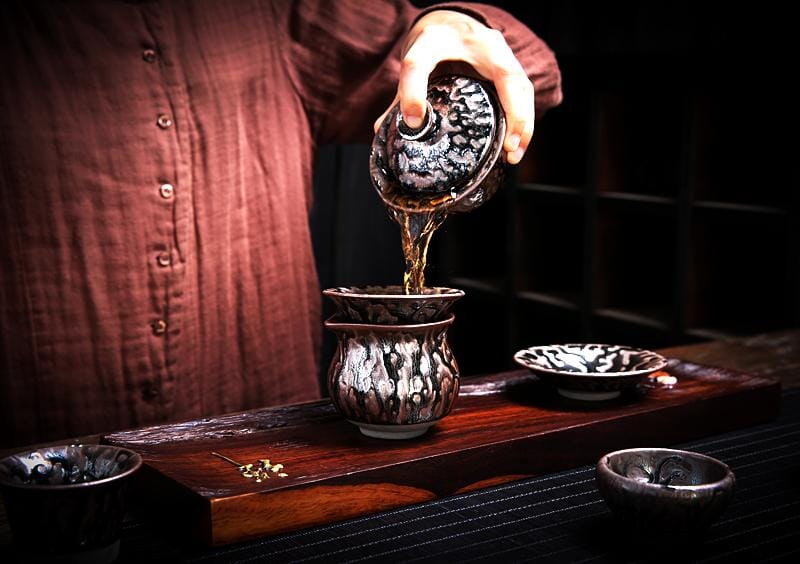
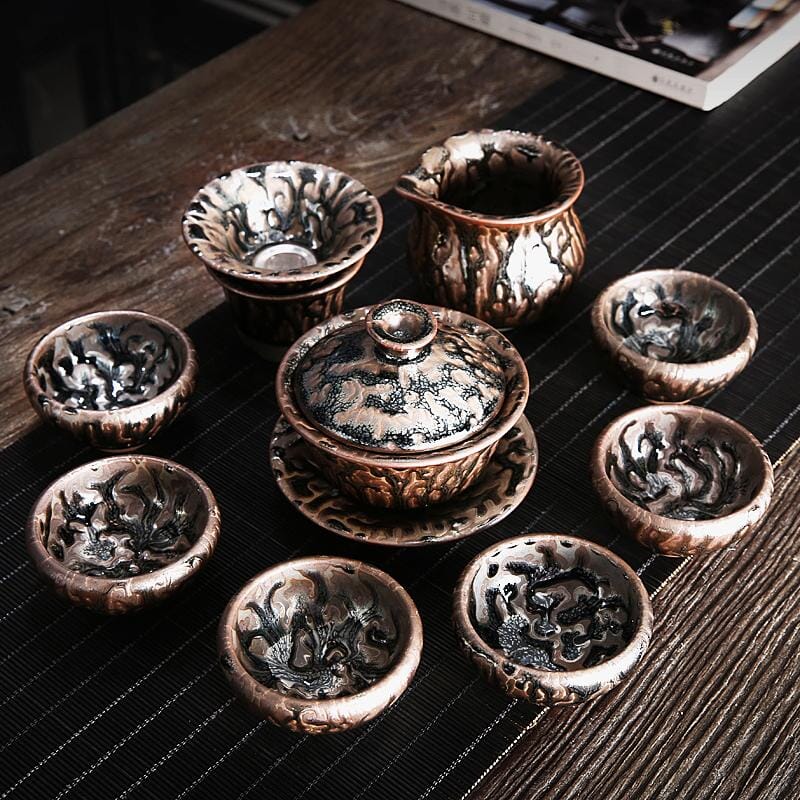
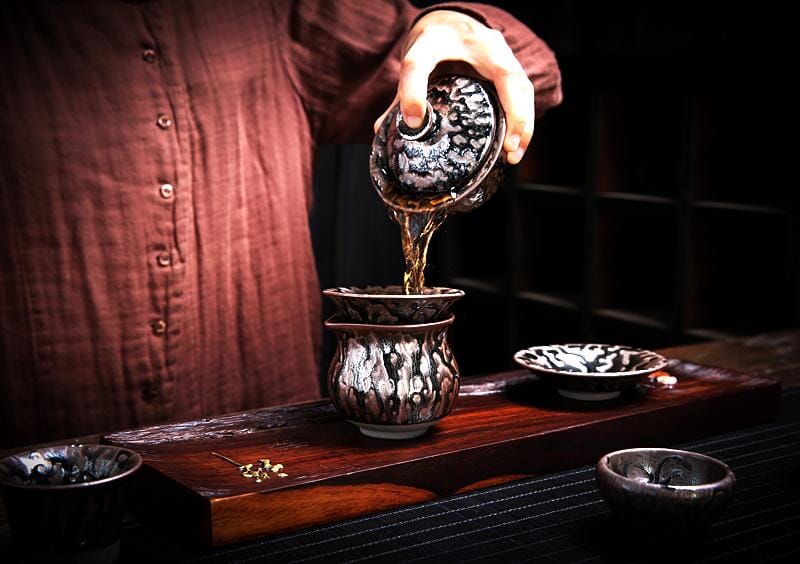
The cover from the Oni Tea Set gallery shows a gaiwan pouring through a strainer into a pitcher. The scene below shows a pitcher pouring into cups. These visible transfers prompted our accounting rule: water moving along the serving route is not a new draw from the kettle.

If one warming pour moves from brewer to pitcher to cups before you discard it, record that original amount once. If you draw another pour from the kettle, add that new amount. Likewise, do not add the volume in all the drinking cups to an infusion amount you have already counted.
Use an estimate, then improve it
Start with the water amount you normally add to the leaves for one infusion. Mark it as an estimate if you have not measured it. Do not substitute a vessel’s advertised brim capacity or the tea collected in your pitcher without noting the difference: this worksheet tracks water put in, while the gaiwan and cup serving-capacity worksheet tracks tea available to portion out.
For a later session, you can portion room-temperature water into a graduated jug before heating it in accordance with the kettle’s instructions. Record each refill and any water left over after it has cooled. This gives you a session-level check without handling a hot kettle on a kitchen scale. Never run the kettle below its permitted operating level to finish a measurement.
Work through one hypothetical session
Suppose you plan six infusions using an estimated 100 ml of fresh water each, allow 200 ml for separate warming and rinse pours, and set aside 150 ml as reserve:
6 × 100 ml + 200 ml + 150 ml = 950 ml total planned water.
These are illustrative inputs, not Oni capacities, a recommended rinse amount, or a claim that every tea yields six rounds. If your later infusions use different amounts, add those amounts individually instead of multiplying one figure.
If you budget 700 ml as available for pouring before a refill, the example leaves 250 ml to supply later. That 250 ml is the remaining session requirement, not an instruction to heat only 250 ml: your kettle may require a larger minimum fill. Follow its minimum, maximum and refill directions. The plan can span more than one heating cycle.
Decide the refill point before starting
Write a simple stop point, such as checking the remaining water between rounds three and four. Pause brewing while you refill and bring the water to your chosen temperature. Do not stretch a low-water kettle beyond its instructions just to avoid interrupting the session.
Keep plain drinking water for guests as a separate entry if it comes from a different source. If it comes from the same kettle supply, include it in the total. Note any extra tea you introduce, since a second tea needs its own infusion and optional preparation entries.
Copy this note: planned rounds __; water per round __; extra fresh pours __; reserve __; total __; refill checkpoint __; amount used or left afterward __. Afterward, adjust one estimate for next time. You can use your current teaware; if choosing a new arrangement, compare the Tenmokus tea set options with your brewing and serving plan and read the selected product details. A photograph alone cannot tell you a session’s water requirement.


Share:
Tea Tasting for Two: Keep A and B Apart