

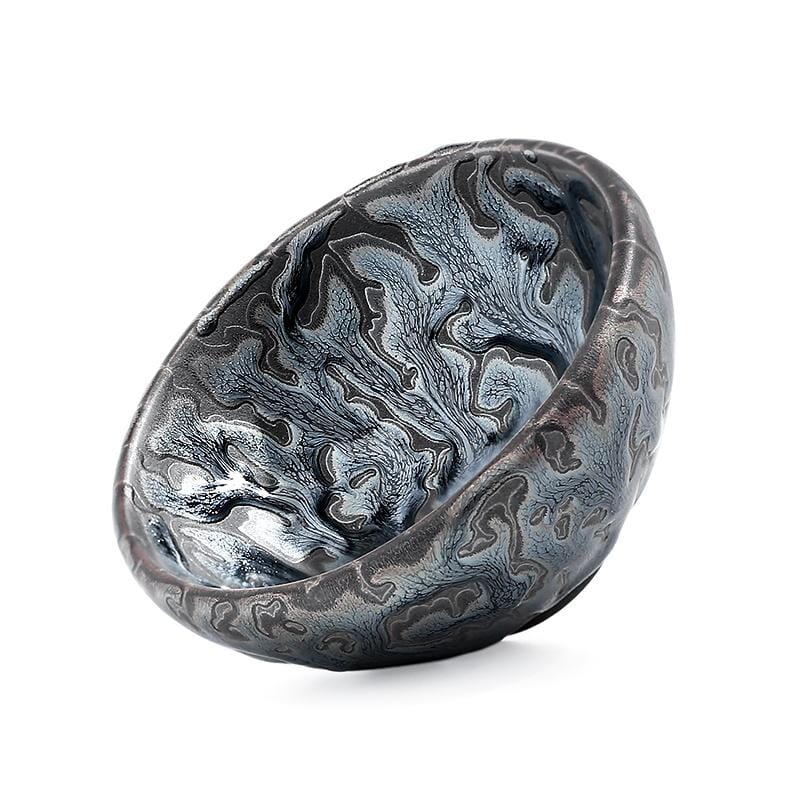
To pack Tenmoku tea cups for a move, wrap each cup separately, give it a padded compartment that fits its widest point, and keep ceramic surfaces from touching. Check the rim and foot before packing, record which cup goes in each space, and unpack one piece at a time on a clear, padded table.
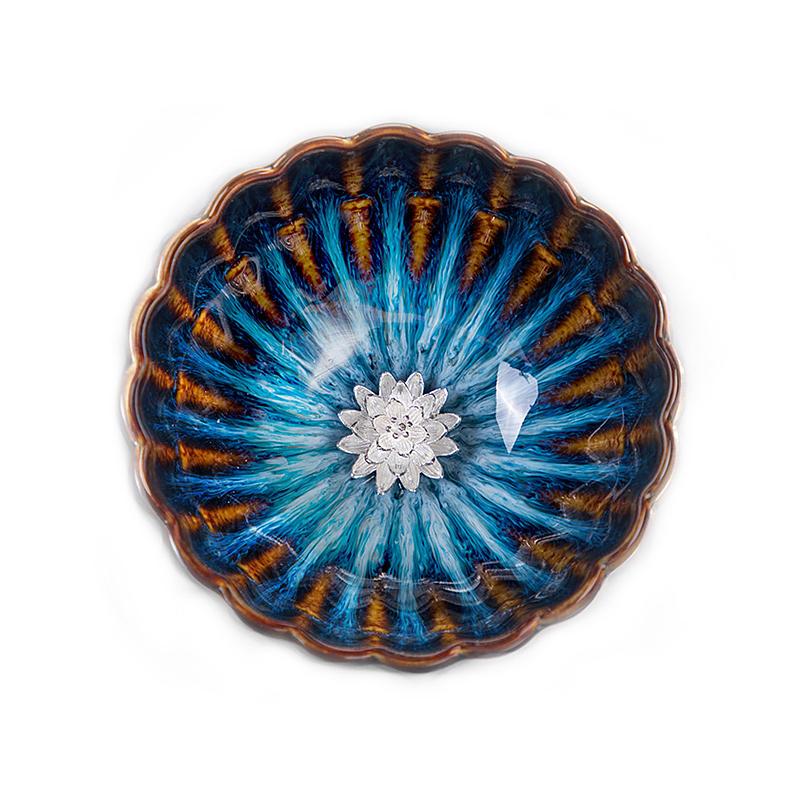
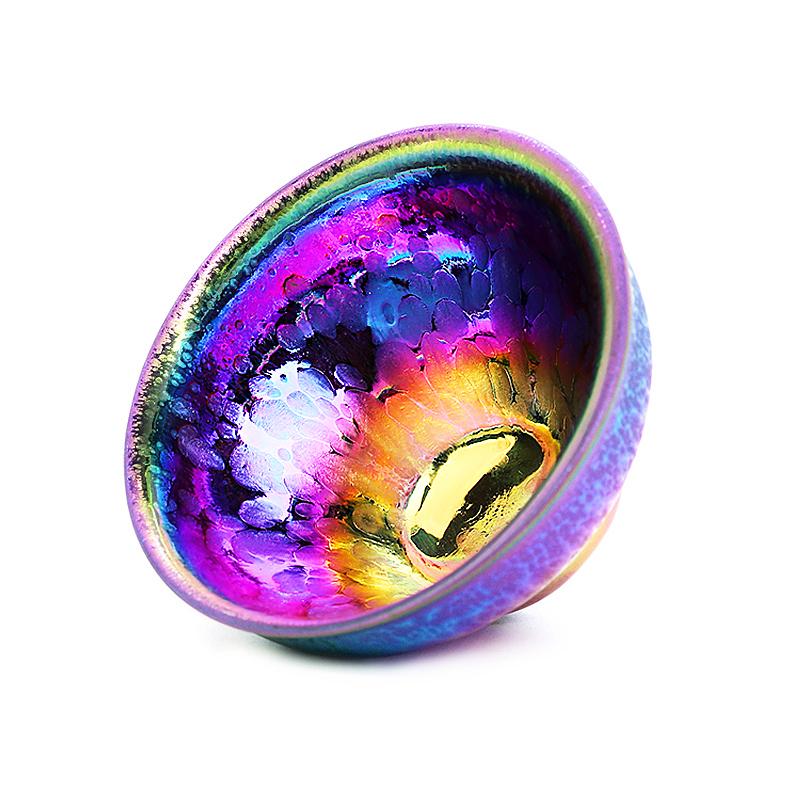
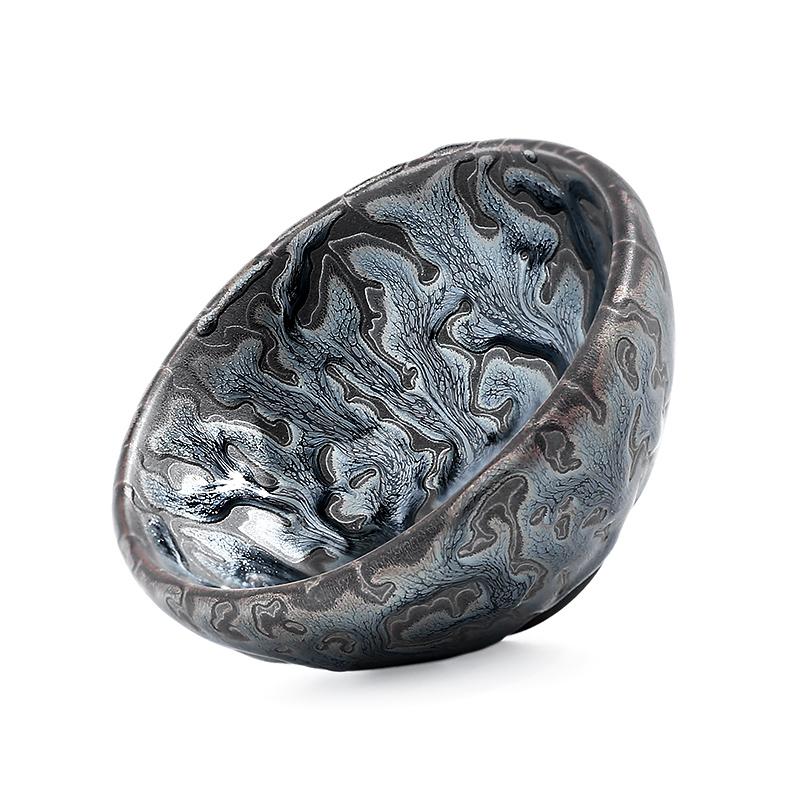
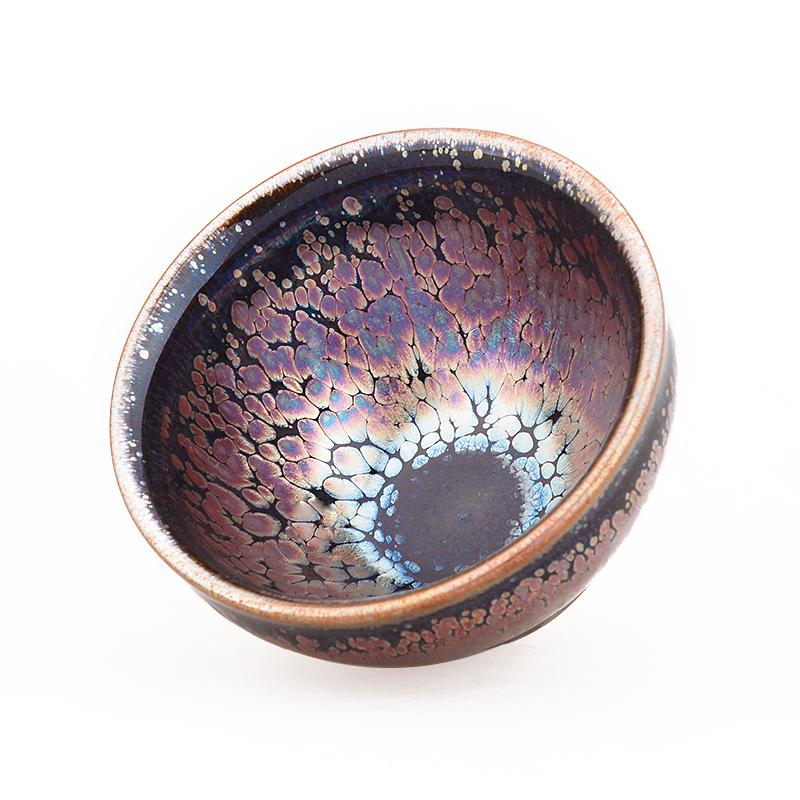
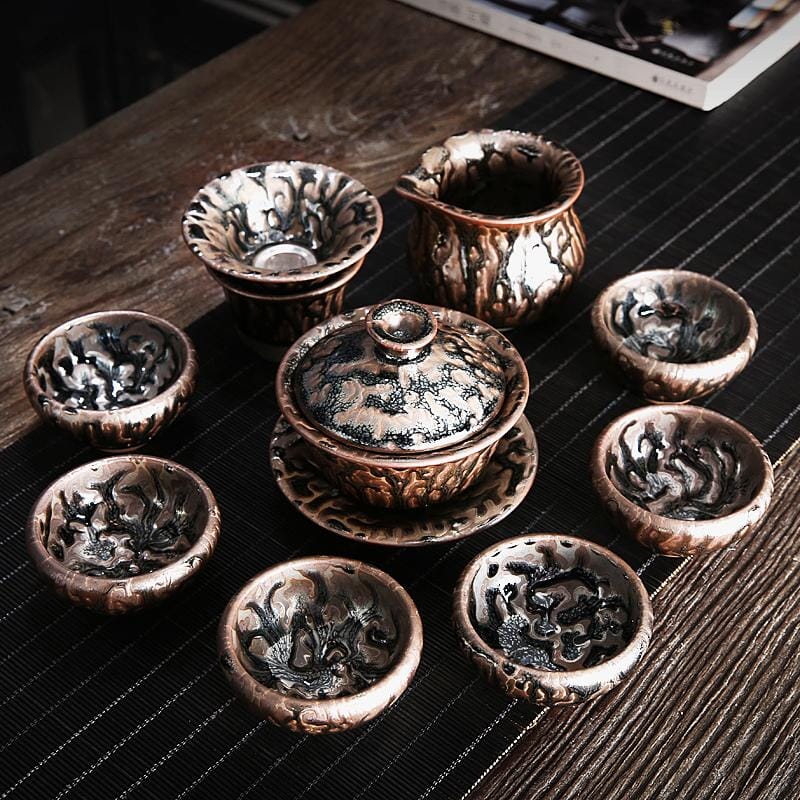
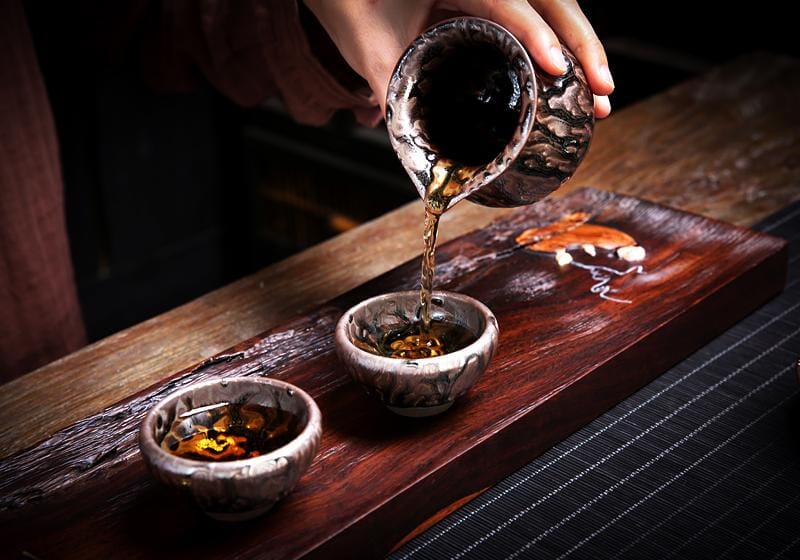
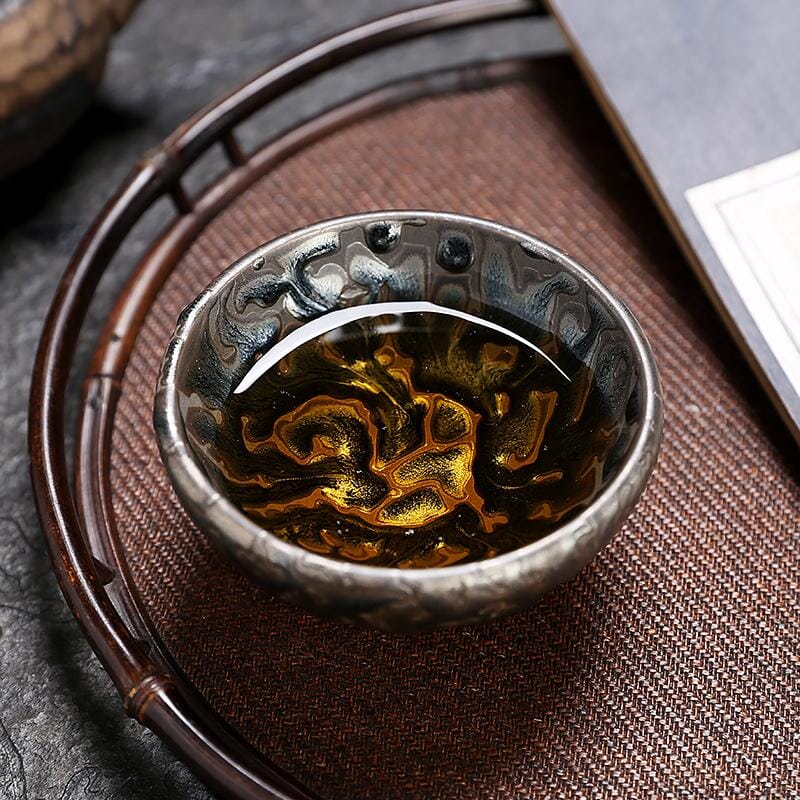
This guide is for moving intact, everyday cups between homes. Our examples use current Tenmokus Oni product photographs to show the shape checks; they are not packing tests. For a cracked, repaired, antique, or especially valuable piece, ask a specialist packer or conservator to assess it individually.
Prepare a small packing station
Gather a sturdy moving carton, clean packing paper, cushioning, suitable dividers, packing tape, and a marker. Choose the compartment after considering the wrapped cup, rather than forcing a cup into a box you already own. U-Haul's guide to dish and glass packing kits shows how individual protective pouches and partitions work together.
Clear enough space to set down one cup and its wrapping. Start with an empty, dry cup. Keep the remaining collection away from the edge of the work area, and work through it one piece at a time.
Check the shape: the rim is wider than the foot
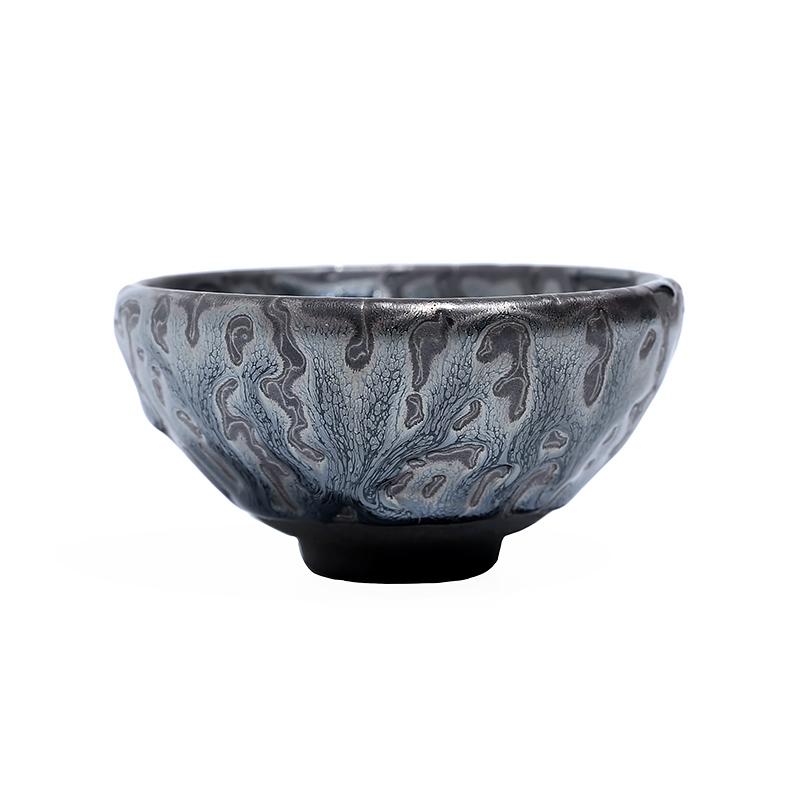
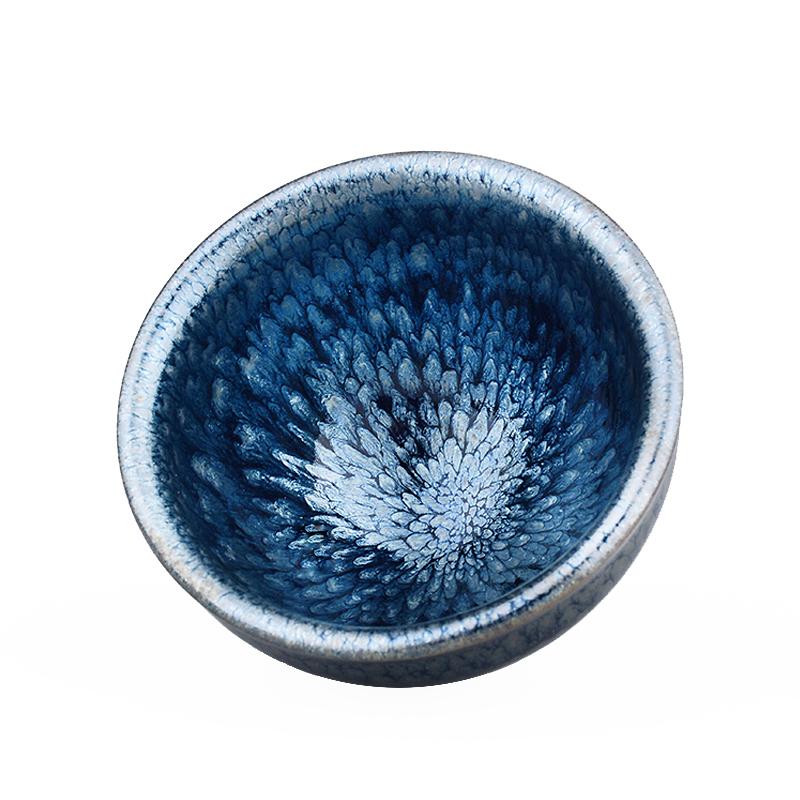
The current Oni product photographs show a broad rim above a narrower foot. That visible difference matters when checking a divider: a space that accommodates the base may still press against the wrapped rim. Measure your own cup at its widest point, then check it again with the wrapping in place.
Record the condition before covering the cup
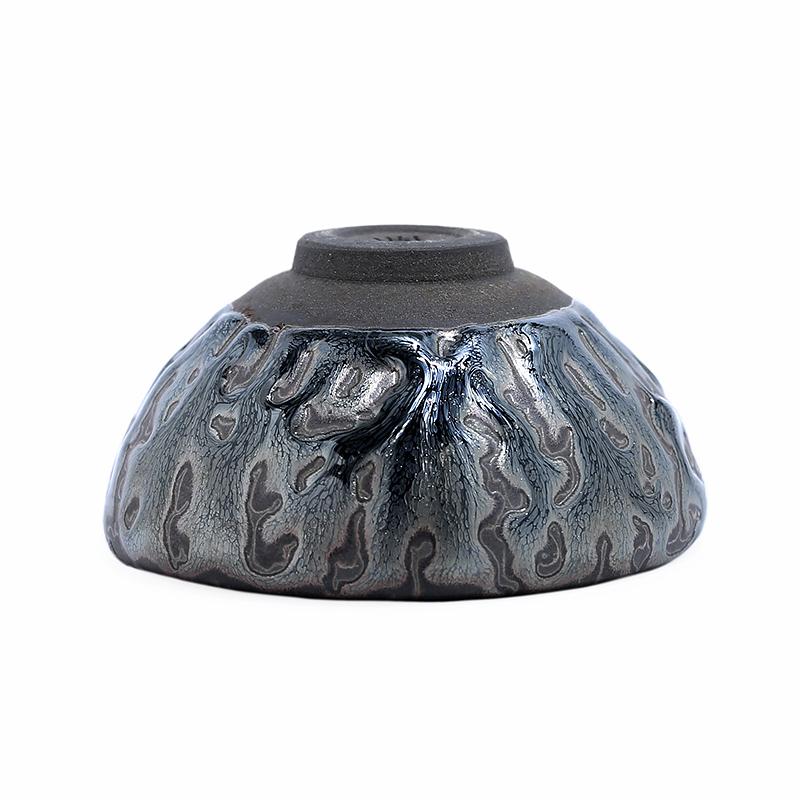
Look over the rim, sides, and foot in good light. Note any existing chip, crack, or repair and take a reference photograph. If you want a fuller record, use our five-view cup photography guide. Keep this record with your unpacking list; do not stick a label directly onto the cup.
Support the cup from beneath and stabilize it with the other hand when lifting it. The Canadian Conservation Institute's ceramic-care guidance emphasizes supporting an object's weight and preventing movement. It also identifies physical force as a central cause of ceramic damage. An attractive glaze does not tell you how a particular cup will withstand an impact.
Wrap and separate each cup
Wrap each cup individually in clean packing paper, covering the rim, sides, and base. Add cushioning around the wrapped piece as needed for the compartment. Secure the wrapping without putting adhesive on the ceramic. Mayflower's kitchen-packing guide recommends individual wrapping even when dividers are used.
For a small cup collection, our recommendation is one cup per padded compartment, with no cup nested inside another. The Canadian Conservation Institute advises separating ceramic objects and using padded boxes so pieces cannot roll into or rub against each other. Do not put loose teaspoons, a lid, or another hard object inside a cup to save space.
Follow the packing system's instructions for placement. General moving guides and fitted packing kits use different arrangements; an upside-down cup is not automatically protected. The important checks are that the cup has support, does not press against hard surfaces, and stays separated from its neighbors.
Use the Tenmokus three-part packing card
This is our editorial checklist for deciding whether a cup is ready to leave the packing table. It is a practical record, not a guarantee against damage.
- Condition: Cup name or personal ID, reference photo, and any existing marks. If a crack or repair needs assessment, set the cup aside for specialist advice.
- Fit: Check the wrapped cup's widest point, its height, and the space above it. If the divider squeezes the rim or the lid presses on the cup, choose a different compartment instead of forcing the fit.
- Separation: Confirm that wrapping remains between the cup and every hard contact point. Fill empty spaces around the protected compartments without compressing the cups.
Record a simple location such as “Box 1, front-left: Oni.” Put a copy of the list inside the box and keep another with your reference photographs.
Close the box, then plan the unpacking
Check that cushioning covers the contents and that the carton closes normally. Do not use the lid to push protruding cups down. United Van Lines' dish-packing guide calls for padding above the dishes, secure packing tape, and a clearly marked fragile box. Add “Tea cups” and the destination room so the carton is easy to find.
At the new home, open the carton on a stable surface with a clear, padded area alongside it. Unwrap one cup at a time, compare it with the condition record, and count every piece before discarding the paper. If something has broken, stop and separate the damaged contents before handling the remaining cups.
For the new tea space, start with the cups you already reach for most. If you are adding a piece, browse the current Tenmokus tea cup collection and compare each product's photographs and listed dimensions with the space you have planned.


Share:
Tenmoku Cup Photography: Five-View Record
Choosing a Saucer for a Tenmoku Tea Cup