Yellow Tea: The Rare and Niche Tea on the Verge of Disappearance
by Tenmokus Editorial Team
1. Current Situation of Yellow Tea: Why It Is "a Tea on the Verge of Disappearance"
As the rarest and most niche category among China's six major tea types, yellow tea's sharp decline in output and marginalized status are mainly due to the dual impacts of historical factors and process characteristics.
From a historical perspective, special historical events such as wars once dealt a heavy blow to the yellow tea industry, leading to a significant drop in output. After the founding of the People's Republic of China, although a tea revival plan was launched, resources were mostly tilted towards green tea and black tea, which had greater market demand, and the restoration of yellow tea did not receive focused attention. From a process perspective, the production of yellow tea requires an additional "yellowing" step on the basis of green tea's fixing process, making the process more complex and time-consuming, with strict requirements for environmental parameters such as temperature and humidity. In addition, to pursue efficiency and profits, original yellow tea producing areas have mostly switched to producing green tea, which has a simpler process, further reducing yellow tea output and gradually making it "a tea on the verge of disappearance". However, it should be noted that a small amount of yellow tea made with traditional techniques still remains on the market; it has not completely disappeared and holds extremely high protection and tasting value.
2. Core Process of Yellow Tea: Yellowing and the Formation of Theaflavins
(1) Yellowing: The "Soul Process" of Yellow Tea's Flavor and Color
The core difference between yellow tea and green tea lies in the additional yellowing process after fixing. By creating a moist and hot environment, it promotes the slow oxidation of tea polyphenols, eventually forming the "three yellows" characteristic of "yellow dry tea, yellow soup, and yellow leaves". According to the moisture content of tea leaves, the yellowing process is divided into two types: dry-blank yellowing and wet-blank yellowing, with significant differences in operating procedures and effects:
Dry-blank Yellowing: After stir-frying the tea leaves until they are 70-80% dry (low moisture content), wrap them neatly with coarse cotton paper and place them in a constant-temperature oven for yellowing. The longest yellowing time can reach three days and three nights. The advantage of this method is that the oxidation process is slow and uniform, making the tea flavor more delicate and layered.
Wet-blank Yellowing: Immediately after fixing, pile up the wet and soft tea blanks and cover them with a damp cloth to maintain a constant temperature for yellowing. Due to the high moisture content of the tea blanks, the oxidation reaction is more intense in the moist and hot environment, resulting in higher conversion efficiency of tea polyphenols and faster formation of the unique color and flavor of yellow tea.
Regardless of the yellowing method, the temperature must be strictly controlled to maintain a relatively constant temperature; otherwise, excessive or insufficient oxidation may occur, affecting the quality of yellow tea.
(2) Theaflavins: The "Golden Component" of Yellow Tea
During the yellowing process, tea polyphenols are gradually oxidized to form theaflavins, which are the key substances determining the bright golden color of yellow tea soup. Sensory-wise, theaflavins not only give the tea soup a natural golden color similar to boiled corn water or Hong Kong-style water chestnut water but also endow it with a sweet aroma without artificial additives. In terms of efficacy, theaflavins have extremely prominent antioxidant capabilities—their free radical scavenging effect is 25 times that of vitamin C and 18 times that of vitamin E. They can activate beneficial factors in the body to collaboratively eliminate metabolic waste. In addition, from the perspective of traditional Chinese medicine, yellow tea belongs to the "earth" element in the Five Elements, which governs the spleen and stomach. It has a health-care effect on the digestive system and can help prevent esophageal cancer with long-term moderate consumption.
3. Classification of Yellow Tea and Analysis of Famous Varieties
Referring to the standard of white tea, yellow tea is classified into three categories based on the tenderness of raw materials: yellow bud tea, yellow small tea, and yellow large tea. Each category has distinct differences in raw materials, flavor, and representative varieties:
(1) Mengding Yellow Bud: A "Living Fossil" in Yellow Bud Tea
Current Status: A traditional craft yellow tea with a relatively large market presence, it is a typical representative of yellow bud tea.
Origin and Raw Materials: Produced in Mengding Mountain, Sichuan, it uses high-quality single buds as raw materials, with plump and full buds.
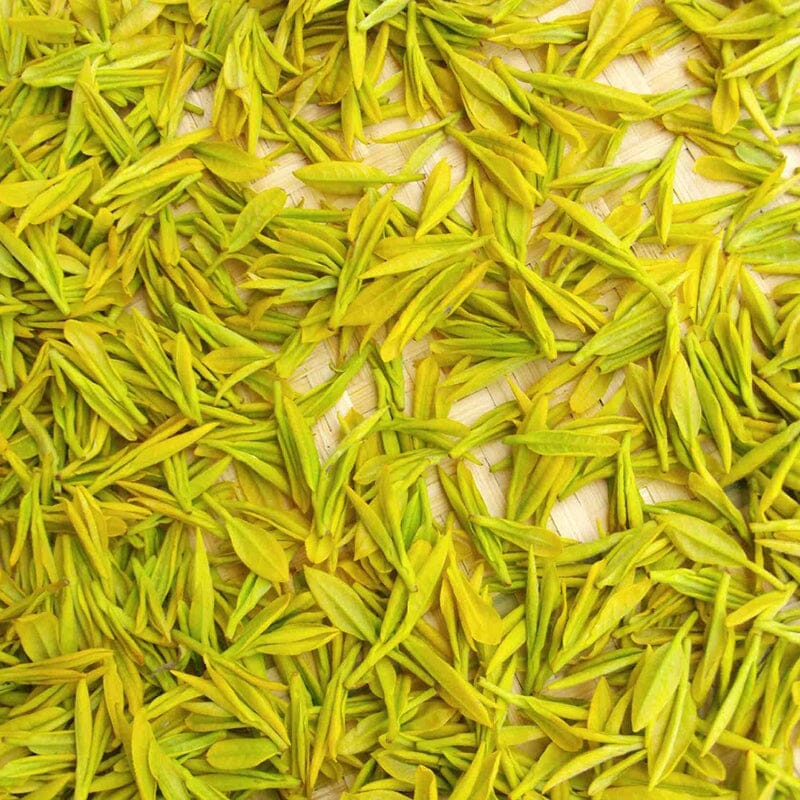
Flavor Characteristics: The dry tea is bright golden yellow; after brewing, the tea soup is golden and transparent. The aroma combines the sweetness of boiled corn and natural floral notes (not artificially scented, but naturally formed from high-quality raw materials). The taste is mellow and sweet without bitterness or astringency.
(2) Weishan Maojian: A "Flavor Maverick" in Yellow Small Tea
Region and Process: A representative yellow small tea from Hunan. Its most distinctive feature lies in the drying process—using maple balls and yellow vine roots for smoking, allowing the tea leaves to absorb a unique smoky aroma.
Flavor Characteristics: The dry tea has a dark yellow color; after brewing, the tea soup has a distinct smoky aroma (similar to the mellow smoky scent of preserved pork, different from the off-odor caused by improper storage). The taste is richer than that of Mengding Yellow Bud, with a layered flavor, making it a yellow tea variety with strong regional characteristics.
4. Tasting Methods of Yellow Tea: Unlocking the Best Flavor
(1) General Brewing Points
Water Temperature Control: The optimal brewing temperature is 90-95℃, which can fully stimulate the aroma and flavor of yellow tea without damaging active ingredients such as theaflavins due to excessively high temperatures.
Utensil Selection: Glass cups or covered bowls are recommended. Glass cups facilitate the observation of the "three yellows" characteristics (the unfolding of dry tea, changes in soup color, and the shape of wet leaves), while covered bowls can better retain the aroma.
Washing Suggestion: The yellow tea production process is clean, and the tea blanks are free of impurities. The tea-washing step can be omitted; direct brewing allows for a better experience of its original flavor.
(2) Variety-specific Brewing Techniques
Mengding Yellow Bud: Due to the tenderness of the buds, the water flow should be gentle during brewing to avoid scattering the buds. The first infusion should be steeped for about 30 seconds, and the steeping time can be appropriately extended for subsequent infusions. Focus on experiencing its sweet floral aroma and the natural sweetness similar to corn.
Weishan Maojian: It is recommended to first inject a small amount of water to moisten the tea for 30 seconds, allowing the tea leaves to fully awaken and release the smoky aroma. For formal brewing, the water temperature can be slightly increased (close to 95℃) to highlight its rich flavor and unique smoky aroma. The steeping time can be slightly longer than that of Mengding Yellow Bud to fully release the flavor.
5. Course Summary
As the rarest category among the six major tea types, the core value of yellow tea is reflected in three aspects: first, process uniqueness—adding a yellowing step on the basis of green tea to form the "three yellows" characteristic and precious ingredients such as theaflavins; second, flavor rarity—from the sweet floral notes of yellow bud tea to the rich smoky flavor of yellow small tea, it has a distinct and irreplaceable style; third, health value—with high antioxidant capacity and spleen-stomach nourishing effects, it combines drinking and health-preserving significance. Although yellow tea is currently on the verge of "disappearance", understanding its process, classification, and tasting methods can better protect and inherit this treasure of traditional tea culture.
Quick answers for Tenmoku teaware shoppers
Use this guide to connect the article topic with practical buying decisions: what Jianzhan Tenmoku teaware is, who it suits, how to choose a piece, and how to care for it after purchase.
How to use this guide before buying
Read the article first for the main explanation, then compare the product photos, glaze variation, form, seller clarity, return policy, and whether the piece fits daily tea, display, collecting, or gifting.
Common buying mistakes to avoid
Avoid choosing only by dramatic claims, copied photos, unusually low prices, or vague master language. A better decision uses visible product details, clear use case, realistic care needs, and trustworthy shop policies.
Recommended next step
After reading, compare a few real products side by side by size, glaze family, rim shape, capacity, price, and gift suitability instead of relying on one photo or one keyword.
What is Jianzhan Tenmoku teaware?
Jianzhan Tenmoku teaware is ceramic tea ware known for dark mineral-glaze effects and natural kiln variation. Common forms include tea cups, bowls, teapots, tea sets, and matcha bowls.
Who is it best for?
It is best for tea drinkers, ceramic collectors, and gift shoppers who value functional objects with visible handmade character. It is not ideal if you need every piece to look exactly identical.
How do I care for it?
Hand wash with warm water, avoid abrasive cleaners, and dry fully before storage. Gentle daily use helps preserve the surface and keeps the glaze easy to inspect over time.
How do I choose the right Tenmoku piece?
Choose by the main use first: daily tea, matcha, Gongfu brewing, display, or gifting. Then compare capacity, rim shape, glaze family, photos, and whether natural variation is acceptable for your needs.
Is Jianzhan Tenmoku teaware good as a gift?
Yes. It works well for tea lovers, ceramic collectors, birthdays, holidays, and housewarming gifts because it is both usable and visually distinctive. For gifts, choose an easy-to-use form and a glaze style with clear photos.
Related products and categories
Compare the guide above with real Tenmokus categories and representative pieces. Start with the use case, then compare glaze style, form, price, and whether the piece is mainly for daily tea, display, collecting, or gifting.
Compare handmade Jianzhan Tenmoku tea cups by glaze style, cup size, hand feel, and gift intent. Check each product page for current photos, capacity, availability, care details, shipping, and return information.
Choose a saucer for a Tenmoku tea cup by checking three things: where the cup's foot sits, whether the cup's sides clear the saucer, and whether you can lift the cup comfortably. Start with the cup you own. A saucer's...
To pack Tenmoku tea cups for a move, wrap each cup separately, give it a padded compartment that fits its widest point, and keep ceramic surfaces from touching. Check the rim and foot before packing, record which cup goes in...






Share:
White Tea: "Green Dressed in White" – The Skincare Tea
How to Identify Handmade Tenmoku