

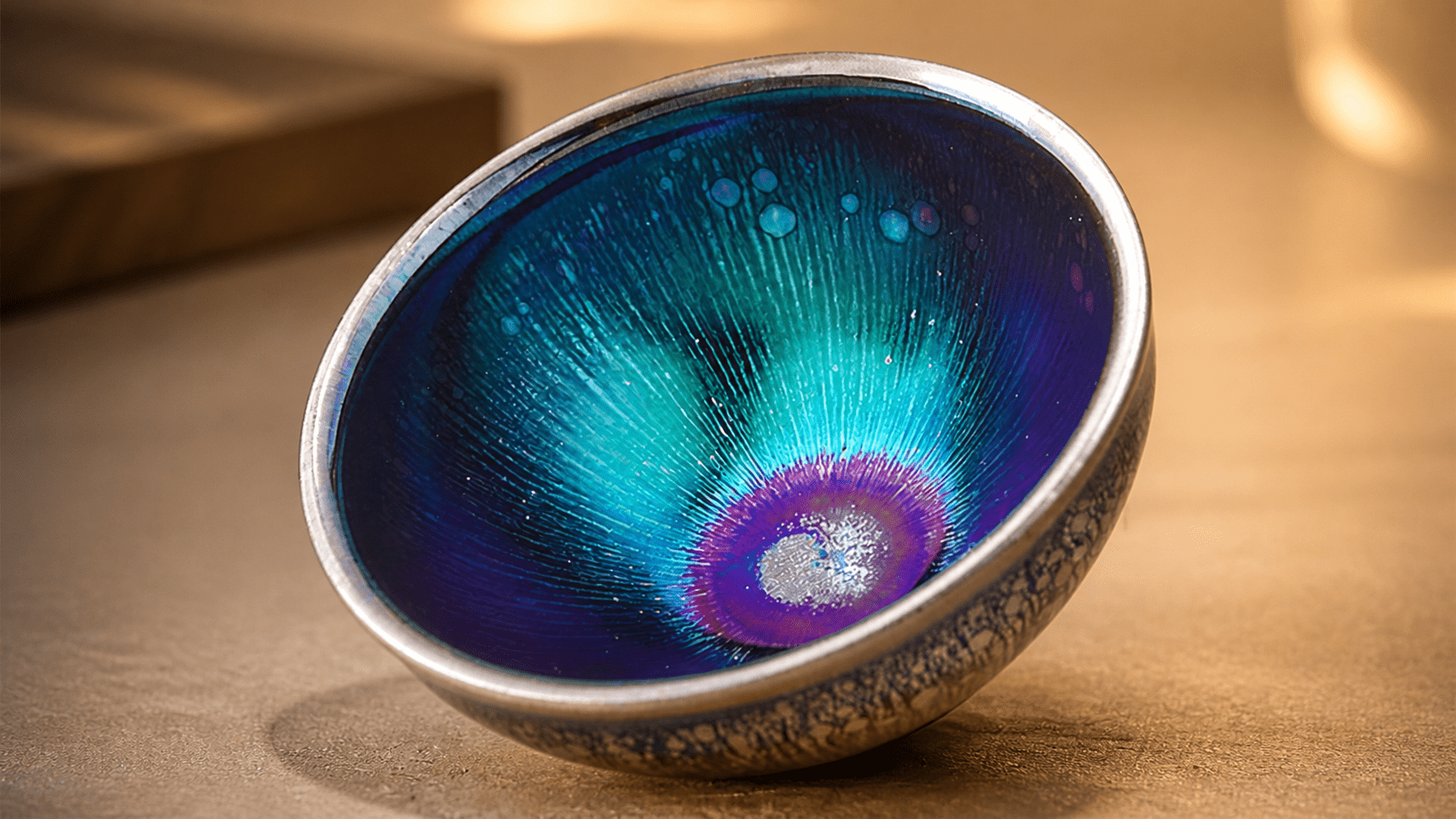

Tenmoku Tea Bowl Authenticity: How to Buy With Confidence
A real tenmoku tea bowl is more than a dark cup with a shiny pattern: it should show evidence of ceramic material, high-temperature firing, and a maker’s honest description. Whether you are preparing gongfu tea at home or choosing a meaningful gift, learning to recognize an authentic Jianzhan tea cup helps you buy the story and craftsmanship—not just a dramatic surface.
Many bowls are inspired by Song Dynasty black-glazed ware, and many are perfectly enjoyable to use. The important question is whether a seller accurately represents what you are buying: a contemporary handmade Jianzhan, a Japanese tenmoku-style bowl, a factory-made imitation, or a genuine antique.
Key Takeaways
- “Tenmoku” is a broad term; it can describe a glaze tradition, while Jianzhan refers more specifically to Jian ware and its modern continuations.
- No single visual detail proves authenticity. Material, firing evidence, finish, maker information, and provenance should agree with one another.
- Natural variation is expected. Handmade iron-rich glaze patterns are rarely perfectly repeated from bowl to bowl.
- “Song Dynasty” requires exceptional proof. Most bowls sold today are contemporary works inspired by historical Song Dynasty ware, not archaeological antiques.
- Ask direct questions before buying. A trustworthy seller can explain where and how the bowl was made, rather than relying only on poetic marketing.
What Does “Real vs Fake Tenmoku” Actually Mean?
The phrase real vs fake tenmoku can be confusing because “tenmoku” is used in several ways. In the United States, sellers may use it for a broad family of dark, high-fired tea bowls with streaked, speckled, or crystalline-looking glazes. The word came into Japan through tea culture and is associated with Japanese pottery traditions, but it ultimately relates to Chinese black-glazed ware connected with Tianmu.
Jianzhan is more specific. Historically, it refers to black-glazed bowls made at Jian kilns in Fujian, China, especially during the Song Dynasty. Their visual effects—such as hare’s fur, oil spot, and partridge feather—came from complex firing behavior in an iron-rich glaze.
That distinction matters when shopping. A Japanese tenmoku cup may be a legitimate handmade work by a Japanese potter, yet it is not automatically Jianzhan. Likewise, a contemporary Chinese bowl can be an authentic Jianzhan tea cup without being a centuries-old Song Dynasty artifact.
Think of it like wine: a bottle can be genuinely made in a recognizable style without being a rare vintage from a famous historic estate. The problem is not contemporary craftsmanship. The problem is a listing that hides or exaggerates what the object actually is.
How to Identify Real Jianzhan: What Should You Check First?
If you are asking how to identify real Jianzhan, begin with the seller’s description before examining the pattern. Good authenticity evaluation is a chain of evidence, not a single “magic” test.
- Read the origin claim precisely. Look for clear wording such as “contemporary handmade Jianzhan,” “made in Fujian,” or “tenmoku-style bowl.” Be cautious when a listing simply says “ancient,” “imperial,” or “Song Dynasty” without documentation.
- Look for a maker, kiln, or workshop identity. A signature alone is not proof, but a named maker or workshop gives you something concrete to research and ask about.
- Inspect the form and foot. Handmade bowls often show subtle differences in wall thickness, trimming, glaze flow, and foot-ring finish. These are not defects; they are normal traces of making.
- Check whether the glaze has depth. A high-fired glaze may appear layered, with visual change as you turn the bowl under neutral light. It should not look like a flat printed sticker sitting on top of the clay.
- Ask about firing and materials. A reputable seller should be able to describe the general process without claiming secret science or unsupported health benefits.
Authentic does not mean flawless. A handmade tea bowl can have tiny pinholes, slight asymmetry, a variation in rim color, or an uneven-looking pattern. What matters is whether those details fit a coherent handmade process and are honestly disclosed.
Jianzhan Oil Spot vs Fake: What Are the Most Useful Visual Clues?
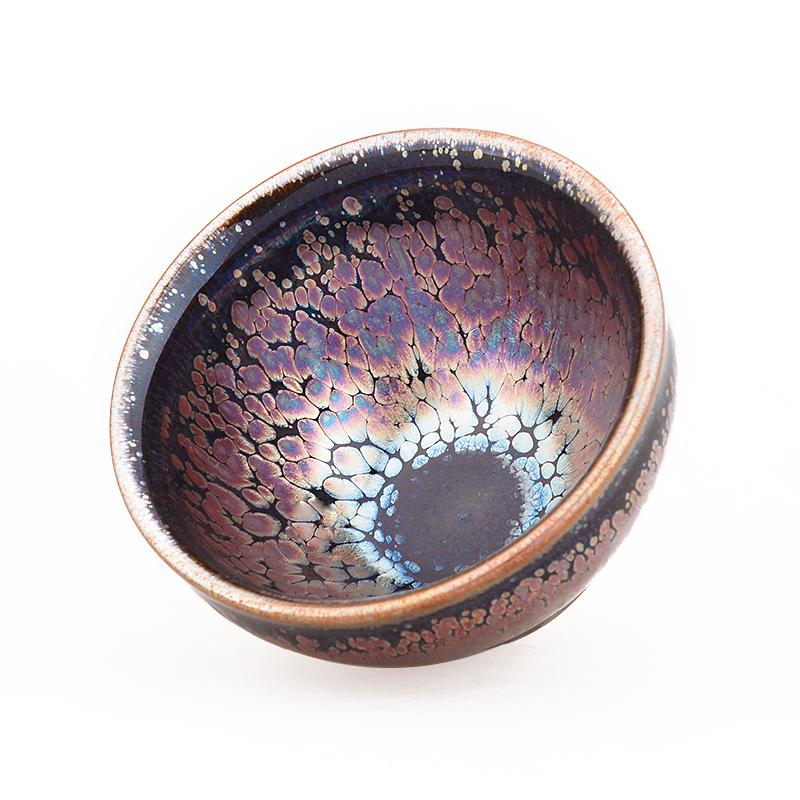
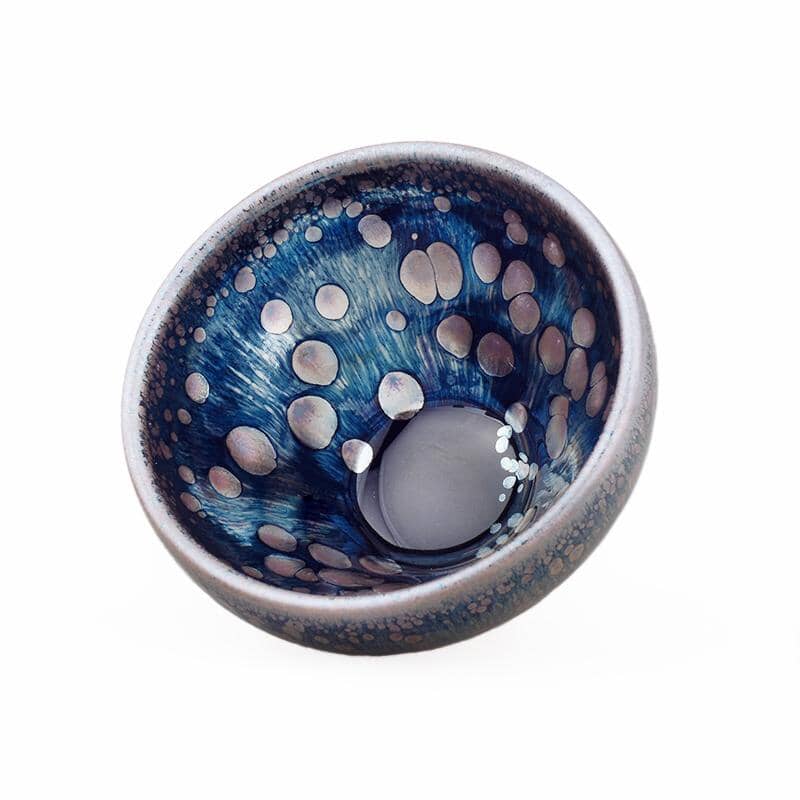
An oil spot tenmoku cup is valued for rounded, metallic-looking spots that can shimmer from bronze to silver, blue, or violet depending on light. But the phrase “oil spot” is also widely used in marketing, so it should not be treated as proof by itself.
When comparing Jianzhan oil spot vs fake, look for the relationship between the pattern and the glaze surface.
| What to Examine | Often Seen in Handmade High-Fired Work | Common Warning Signs |
|---|---|---|
| Pattern variation | Spots and streaks differ in size, density, and placement. | Nearly identical repeated motifs across many bowls or an obviously stamped appearance. |
| Glaze depth | Color shifts gradually as the bowl moves in light; the effect appears integrated into the surface. | Flat, uniform iridescence or a coating that looks visually separate from the glaze. |
| Rim and foot | Glaze pooling, thinning, and trimming marks may vary naturally. | Perfectly identical finish from rim to foot on very low-priced “handmade” inventory. |
| Listing language | Specific and modest: material, workshop, firing style, and contemporary status are explained. | Grand claims about rarity, age, healing properties, or museum quality without evidence. |
| Price logic | Price reflects labor, maker reputation, finish, and retailer support. | “Rare antique” claims paired with implausibly low pricing and no provenance. |
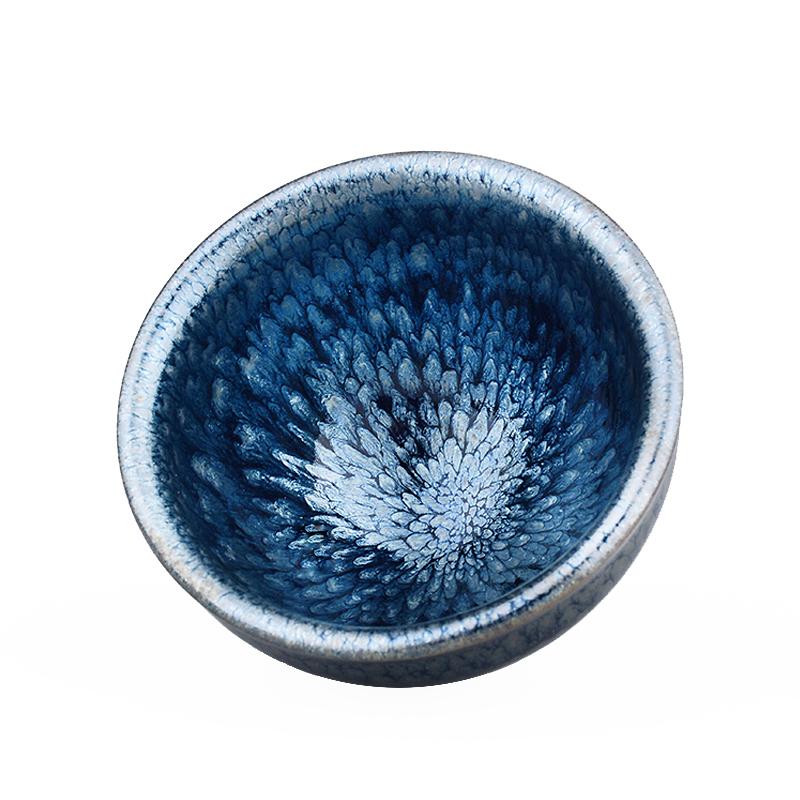
Hare’s fur and partridge feather are also common descriptions. Hare’s fur usually refers to fine, radiating streaks; partridge feather often describes spotted or feather-like effects. These terms identify a look, not a guarantee of age or origin.
Use daylight or soft white light when evaluating a bowl. Highly saturated product photos, heavy filters, and extreme spotlighting can make ordinary metallic glaze look more dramatic than it does in person. Ask for an unedited video or several photos from different angles if the purchase is significant.
What Materials and Process Markers Support an Authentic Jianzhan Claim?
Traditional Jian ware is associated with dark clay and an iron-rich glaze fired at high temperatures. During firing, iron in the glaze can form visible effects that collectors associate with oil spot, hare’s fur, and other surface patterns. The exact result is sensitive to clay, glaze composition, kiln atmosphere, temperature, cooling, and placement in the kiln.
That is why two handmade bowls from the same workshop can look related but never identical. A convincing contemporary Jianzhan often has visual complexity that feels grown through firing rather than mechanically applied after the fact.
However, visual complexity is not a license to make unsupported claims. Do not assume that a bowl is food-safe, lead-free, antique, or made at a particular kiln simply because it has a dark glaze. For a bowl intended for daily gongfu tea or pu-erh tea, ask the retailer about intended use and any available testing or product documentation.
A reliable product page should separate facts from tradition. For example, “handmade contemporary bowl with an iron-rich glaze” is a clear product statement. “This bowl transforms water” is an unverified performance claim and should not be the reason you buy.
How Can You Avoid Common Tenmoku Tea Bowl Fakes Online?
Online shopping makes it easy to compare designs, but it also makes vague claims easy to repeat. The safest approach is to evaluate the listing as carefully as the bowl.
- Be skeptical of antique language without paperwork. A genuine Song Dynasty bowl is an archaeological and collecting matter, not an ordinary lifestyle purchase. Provenance, condition reporting, and specialist expertise matter.
- Watch for stock-photo repetition. If the same “one-of-a-kind” bowl appears on multiple unrelated sites, the listing may not represent the item you will receive.
- Request the exact bowl. For handmade work, ask whether photos show the actual piece. If variations are expected, request a clear explanation of what may differ.
- Check the return policy. A fair return process is especially important for glaze-driven purchases, where color can appear different on different screens.
- Value transparency over theatrical language. A seller who says “contemporary tenmoku-inspired bowl” may be more trustworthy than one who claims a miraculous, ancient treasure with no details.
Price can be informative, but it is not a complete test. A low-priced bowl may simply be factory-made, which can be fine if it is accurately presented. A high price does not prove authenticity either. Pay for documented craftsmanship, not mystery.
Is an Authentic Jianzhan Tea Cup a Good Gift for Tea Lovers?
Yes—an authentic Jianzhan tea cup can make an excellent jianzhan tea cup gift when the recipient enjoys tea, craft, or collecting. It is especially suited to someone who appreciates slowing down for a personal tea session rather than treating tea ware as disposable kitchen equipment.
For a beginner, choose a bowl with a comfortable rim, stable foot, and a size appropriate for a small gongfu tea session. For a more experienced tea lover, consider a bowl whose glaze pattern is visually distinctive but still easy to live with day to day.
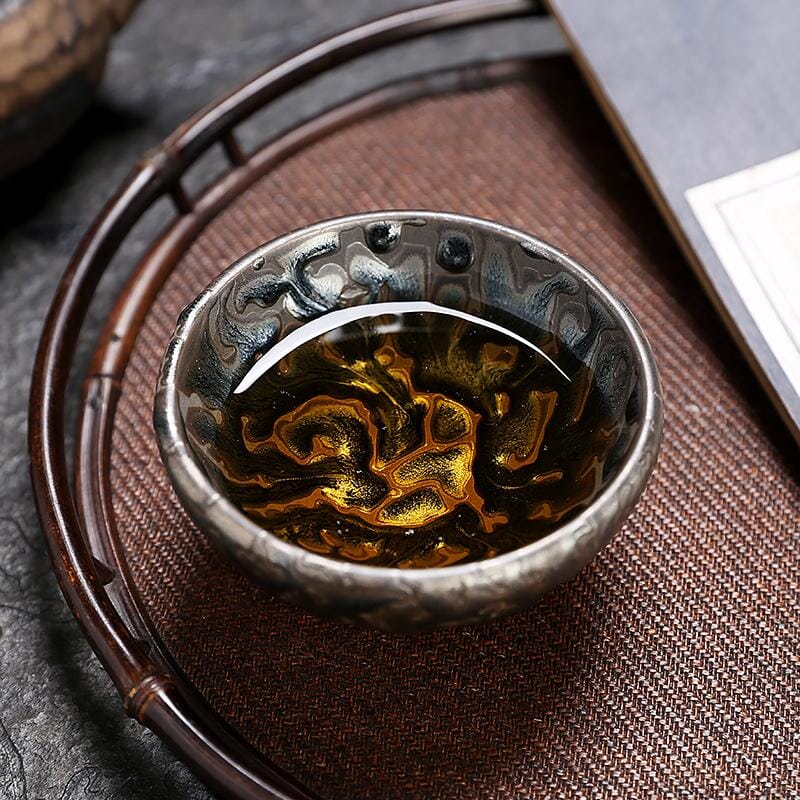
Pu-erh tea, oolong, and darker teas can look striking against a deep glaze, but there is no single “correct” pairing. A tea bowl is partly practical and partly visual: the changing liquid color, warm bowl in the hands, and reflective glaze create a small ritual at the table.
If you want a present with clear contemporary provenance, Shop authentic Tenmoku tea bowls and compare each item’s maker details, photographs, dimensions, and care guidance. A thoughtfully chosen contemporary bowl is often a better gift than an unverified object marketed as ancient.
FAQ: Real vs Fake Tenmoku Tea Bowls
How do I identify real Jianzhan without being an expert?
Start with truthful product information: the maker or workshop, contemporary versus antique status, photos of the actual bowl, and a clear description of materials and firing. Then examine whether the glaze, foot, and pattern show natural variation consistent with handmade ceramics. No home test can prove every claim, so seller transparency is essential.
Is Jianzhan oil spot vs fake easy to tell from a photo?
Not always. Photos can exaggerate color shifts and metallic effects. Look for several unedited views, especially a video under neutral light, and check whether the pattern appears integrated into the glaze rather than printed or uniformly coated on top.
Are all Japanese tenmoku cups authentic Jianzhan?
No. Japan has important Japanese pottery traditions involving tenmoku-style glazes, and a handmade Japanese bowl can be entirely authentic as Japanese pottery. But it should not be called Jianzhan unless its origin and making genuinely support that specific claim.
Does “Song Dynasty glaze” mean the bowl is from the Song Dynasty?
No. It often means the bowl is inspired by Song Dynasty glaze traditions or visual effects. A genuine Song Dynasty object needs credible provenance and specialist assessment; most bowls available for tea use today are contemporary works.
Can an authentic Jianzhan tea cup have small imperfections?
Yes. Subtle asymmetry, tiny pinholes, glaze variation, and hand-trimmed differences are common in handmade high-fired ceramics. Serious cracks, sharp flaws, or undisclosed structural damage are different matters and should be clearly disclosed.
What should I ask before buying a tenmoku tea bowl as a gift?
Ask whether the images show the exact piece, where it was made, its dimensions and capacity, whether it is intended for tea use, how it should be cared for, and what return options apply. Those answers are more useful than a generic claim of rarity.
Choose Transparency, Not Just a Dramatic Glaze
The best way to approach real vs fake tenmoku is to replace the search for one perfect visual test with a practical checklist: honest origin, credible maker information, natural handmade variation, useful product details, and a seller willing to answer questions.
A beautiful tenmoku tea bowl does not need to pretend to be an antique to be meaningful. A well-made contemporary piece can bring the visual language of iron-rich glaze, Song Dynasty inspiration, and tea culture into a daily ritual with integrity. Explore our handmade Jianzhan tea cups to find a bowl selected for both tea use and lasting appreciation.
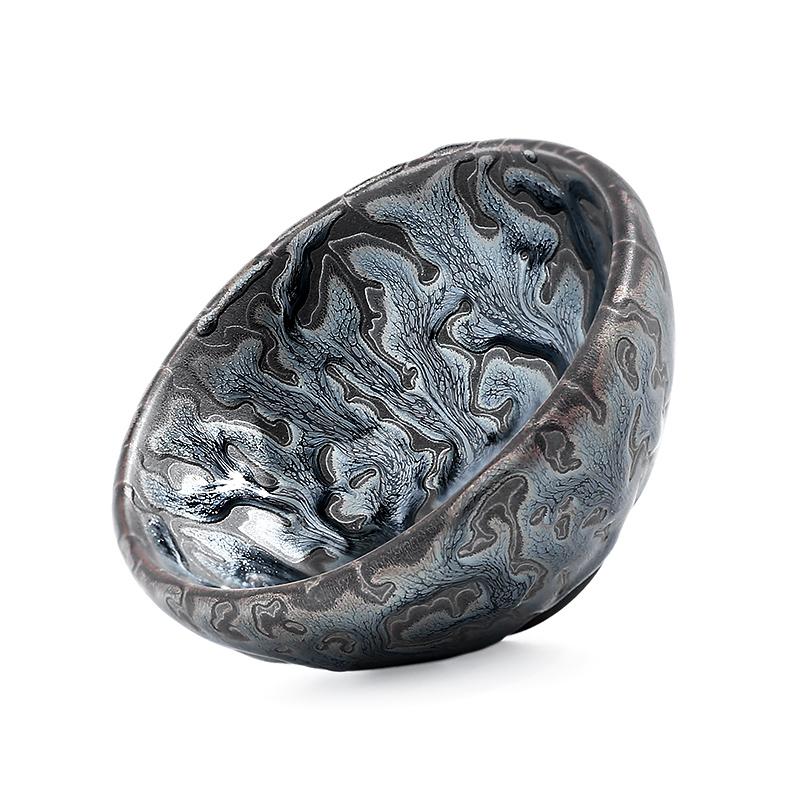
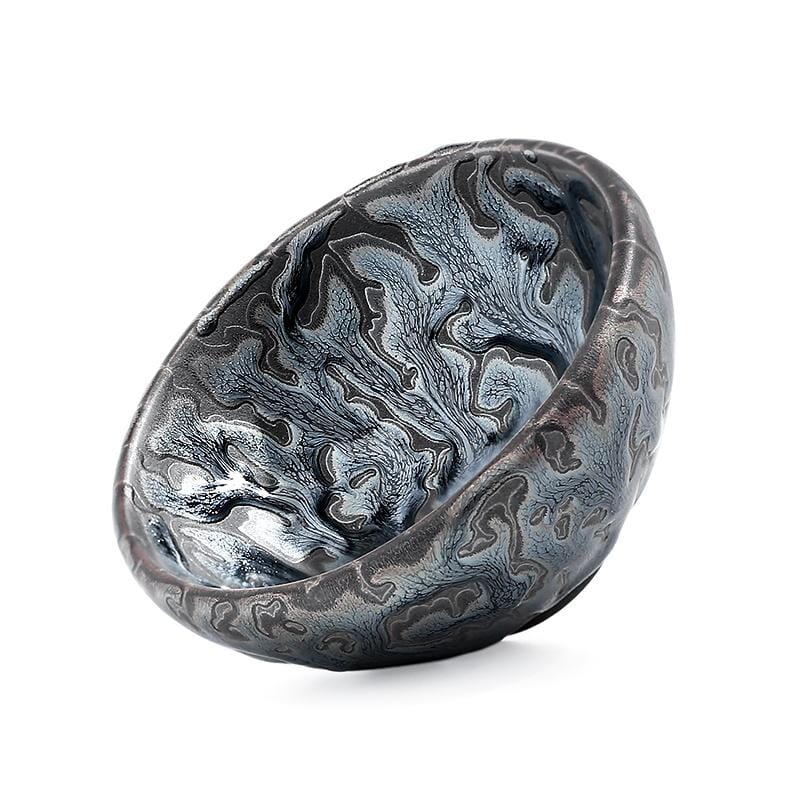
Featured image alt text: handmade tenmoku tea bowl tenmoku tea cup for gongfu tea
Secondary image alt text: japanese tenmoku cup with hare's fur pattern
Explore Our Collection
Ready to experience the world of tenmoku tea bowl? Browse our curated collection:
Disclaimer: This article is for informational purposes. Products and pricing subject to change.


Share:
Tenmoku Tea Bowl: Elevate Your Daily Tea Ritual at Home
Tenmoku Tea Bowl: The Handmade Story Behind a More Meaningful Tea Ritual