


Why a Tenmoku Tea Bowl Is Expensive—and How to Buy One With Confidence
A tenmoku tea bowl costs more than an ordinary cup because its value comes from skilled handwork, difficult high-fire glazing, and the one-of-a-kind surface created in the kiln. For someone brewing gongfu tea at home or choosing a gift for tea lovers, a black-glazed tea bowl is not just drinkware—it is a small, usable work of ceramic art.
The key is knowing what you are paying for. A higher tenmoku tea bowl price does not automatically mean better quality, but a genuinely handmade piece requires more labor, more material judgment, and more firing risk than a factory-made cup. This guide explains the difference in plain English so you can buy for enjoyment, not hype.
What Are the Key Takeaways About a Tenmoku Tea Bowl Price?
- You are buying a process, not just a vessel. Handmade shaping, glazing, firing, and inspection all affect cost.
- The kiln creates the visual result. Patterns such as hare’s fur and oil spot develop under intense heat and cannot be copied perfectly by hand.
- “Tenmoku” needs context. The name is closely associated with Japanese tea culture, while Jian ware and modern jianzhan are rooted in China’s Jian kiln tradition.
- The best value jian zhan is usually a well-made piece you will use often. A balanced bowl, comfortable rim, honest product details, and a glaze you genuinely enjoy matter more than chasing the rarest-looking pattern.
- Price alone is not proof of authenticity. Ask what was handmade, how the bowl was fired, and whether photos show the actual piece you will receive.
What Does a Tenmoku Tea Bowl Price Actually Pay For?
It helps to think of a handmade tenmoku tea cup like a small-batch bottle of wine or a hand-finished leather bag. The raw material is only one part of the price. Much of the value comes from trained judgment and the number of decisions made before the finished object reaches your tea table.
First, the maker shapes the bowl. Even a simple-looking form must sit level, feel stable in the hand, and drink comfortably at the rim. A good tea bowl has visual weight without feeling clumsy. That balance is especially noticeable during a gongfu tea session, when you repeatedly lift, turn, and set down the cup.
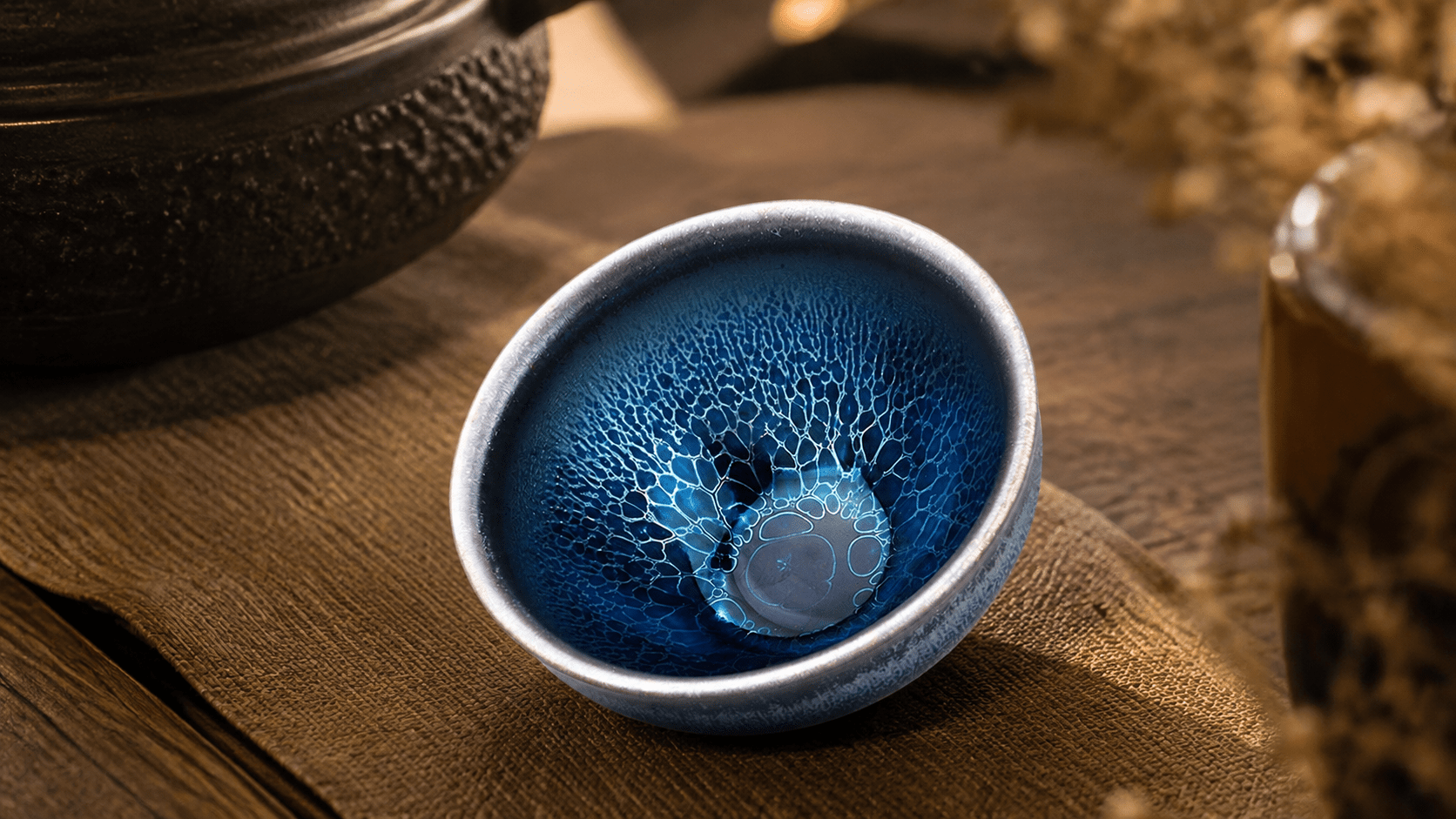
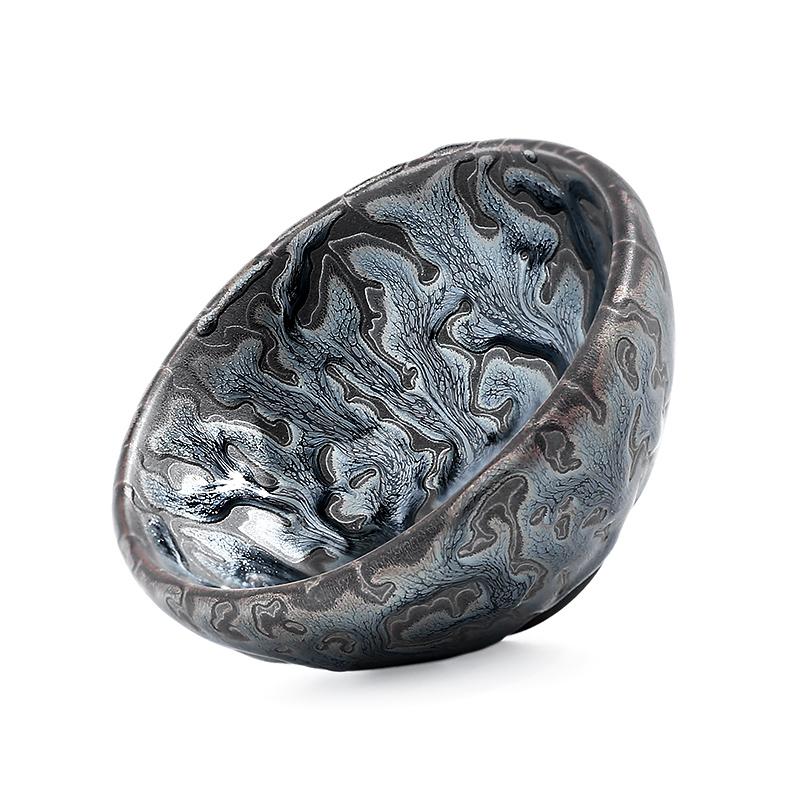
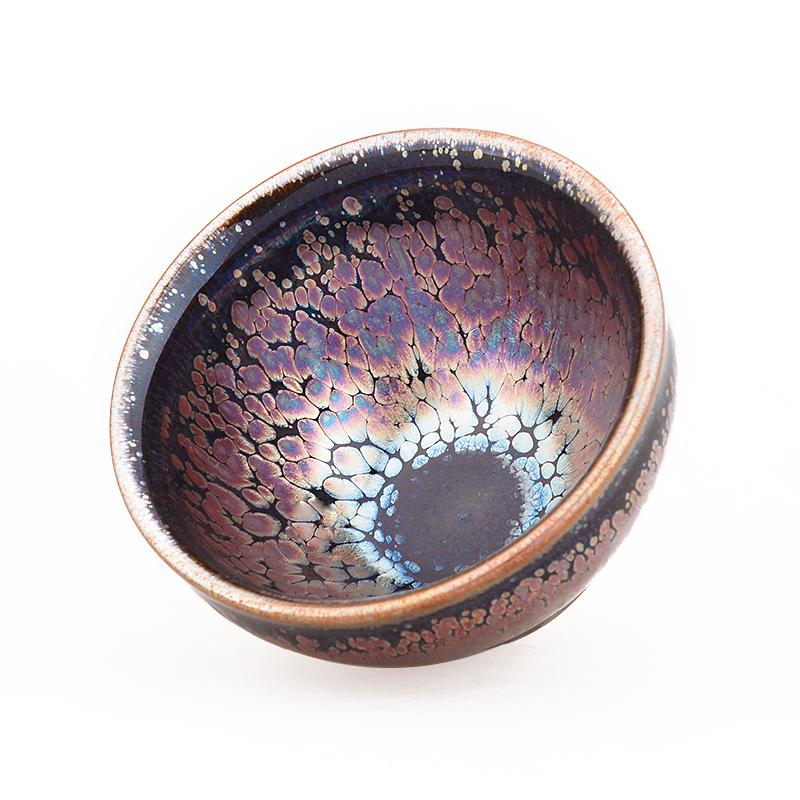
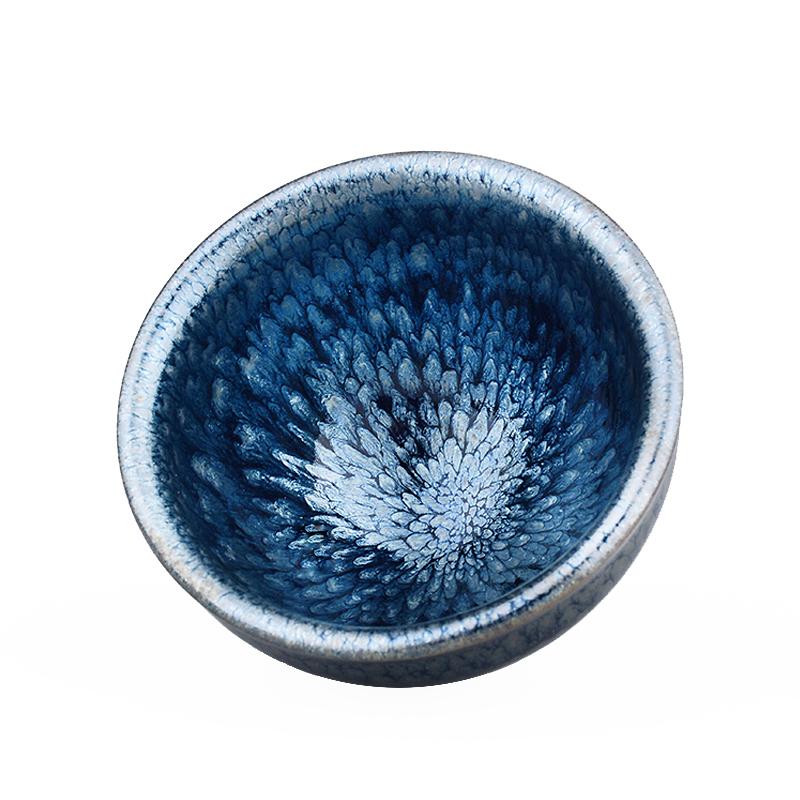
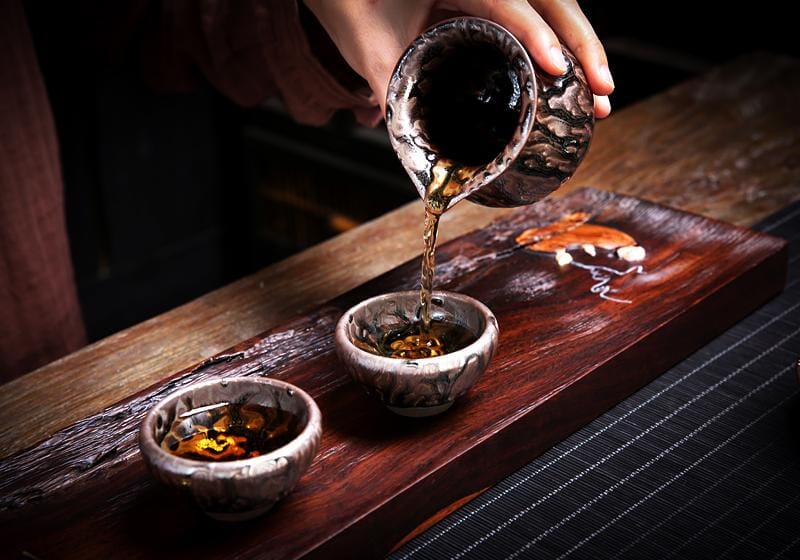
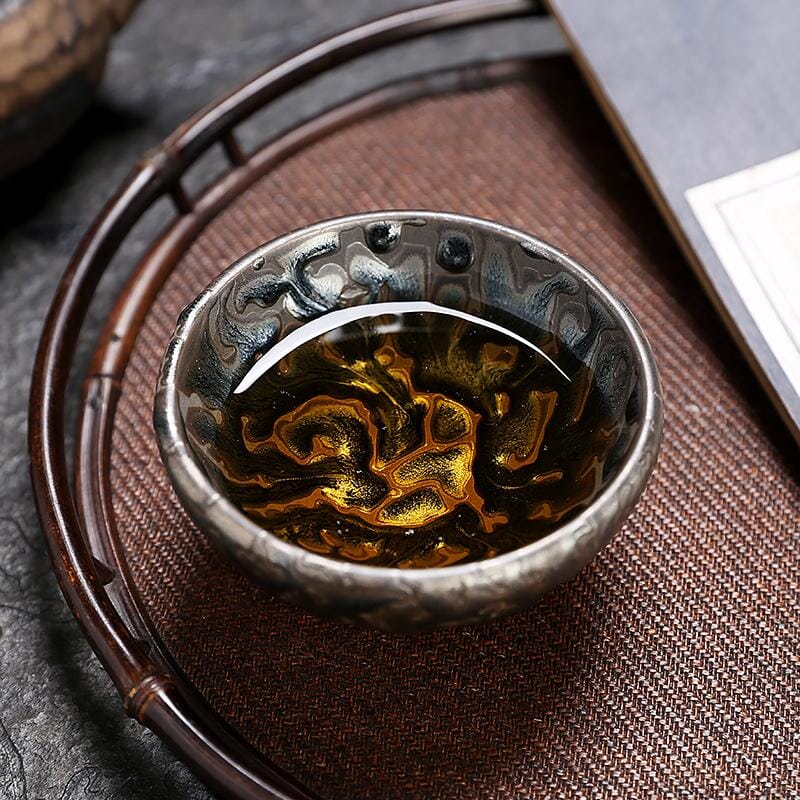
Next comes the glaze. Tenmoku-style black glazes are valued for depth: a dark field may reveal fine streaks, metallic-looking specks, or shifting tones when tilted toward light. An oil spot tenmoku cup may show small, reflective spots across its surface, while a hare’s fur pattern can appear as slender, flowing lines. These effects are not decorative decals placed on after firing; they emerge from the interaction of glaze, heat, atmosphere, and cooling.
That uncertainty matters. A maker can control the recipe and firing approach, but no two kiln outcomes are identical. A promising glaze can mature beautifully, turn out visually quiet, or develop a flaw that removes it from a maker’s best selection. The saleable bowl therefore carries some of the cost of experimentation and pieces that did not meet the desired standard.
Finally, the object must be finished, photographed, packed, and presented accurately. With handmade jian zhan tea cups, small differences in glaze placement, foot shape, and color are part of the point. A trustworthy seller should describe those differences clearly rather than presenting every bowl as identical.
The phrase Song Dynasty glaze is often used because historical Jian ware became famous during the Song Dynasty for its dark, iron-rich glazes and striking kiln effects. It should not be read as a promise that every modern bowl is an antique or a museum replica. A responsible description distinguishes historical inspiration from the actual, contemporary piece being sold.
Why Is Tenmoku Expensive Compared With Everyday Japanese Pottery?
The short answer to why tenmoku is expensive is that the visual character buyers want is hard to produce consistently. Everyday ceramic cups are often designed for repeatability: same size, same color, same result. A handmade tenmoku tea bowl is often designed around controlled variation.
Japanese pottery offers a useful comparison for American buyers. In Japan, tea ceramics are often appreciated for the maker’s touch, the surface’s natural variation, and the way a bowl changes through use and light. But “Japanese” and “tenmoku” are not interchangeable labels. The word tenmoku entered Japanese tea culture, while jianzhan refers to the Jian ware tradition associated with China. Understanding that distinction helps you evaluate a listing more carefully.
A handmade bowl can also involve more hands-on inspection than mass-produced drinkware. The maker or studio checks the rim, foot, glaze coverage, balance, and overall finish. Minor variation may be normal; sharp edges, unstable footing, structural cracks, or vague descriptions are not premium features.
Luxury buyers often recognize this logic in other categories. A hand-stitched shoe costs more than a molded sneaker not because every stitch is visibly dramatic, but because the work is slower, less uniform, and more dependent on skill. In the same way, a tenmoku tea bowl price reflects both the final object and the specialized process behind it.
How Does Jianzhan Cost Change With Glaze, Firing, and Rarity?
Jian zhan cost changes when the work becomes more difficult to execute, not simply when the listing uses more dramatic language. Glaze type can affect price because some surfaces demand tighter firing control or have a lower rate of desirable results. However, terms such as “rare,” “museum quality,” or “masterpiece” should be supported with specifics, not used as a substitute for information.
Three factors are especially useful when comparing bowls:
- Glaze clarity and depth: Look for a surface with intentional visual depth, rather than a flat coating that only appears interesting under edited lighting.
- Firing outcome: A kiln change can create unexpected color shifts or pattern movement. It is part of ceramic firing, but it should not be treated as a guarantee of superior quality by itself.
- Form and finish: The bowl should feel resolved from rim to foot. A beautiful glaze does not compensate for an uncomfortable shape or poor balance.
Hare’s fur and oil spot are familiar pattern names, but they are not a universal ranking system. One buyer may prefer a quiet, dark bowl that makes pale tea stand out; another may want bright oil spotting that becomes a conversation piece after dinner. The right choice depends on your tea ritual and taste, not an abstract race for the flashiest surface.
For example, if you enjoy aged pu-erh tea, you may appreciate how a dark interior frames the warm amber or deep red liquor. If you host a tea ceremony for friends, a more expressive glaze may make the serving moment feel special. Neither use case requires the most expensive bowl in a collection.
How Does a Handmade Tenmoku Tea Bowl Compare With Factory Drinkware?
| What you are comparing | Factory-made cup | Handmade tenmoku tea bowl |
|---|---|---|
| Appearance | Designed to be highly uniform | Variation in glaze, color, and form is expected |
| Making process | Optimized for repeat production | Shaped, glazed, fired, and selected with more individual judgment |
| Glaze effect | Often printed, sprayed, or standardized | May develop kiln-responsive effects such as hare’s fur or oil spot |
| Buying experience | Choose a model | Often choose a particular bowl with its own character |
| Best for | Daily utility and matching sets | Gongfu tea, collecting, gifting, and a more tactile tea ceremony |
This is not an argument that factory drinkware is inferior. A matching set can be practical, durable, and perfect for a busy household. The point is that handmade value follows a different logic. When you choose handmade jian zhan tea cups, you are accepting variation in exchange for individuality and a closer connection to craft.
What Is the Best Value Jianzhan for a First-Time Buyer?
The best value jian zhan is rarely the cheapest bowl and rarely the most expensive one. It is the bowl that gives you a convincing handmade experience, clear product information, and enough practical comfort that you reach for it several times a week.
For a first purchase, prioritize a medium-sized bowl that fits naturally in your hand and works with the tea you already drink. A dramatic wide bowl may look impressive online, but it can cool tea quickly. A very small cup can be excellent for gongfu tea, yet less versatile if you usually brew a larger mug of tea at your desk.
Use this buyer checklist before comparing a tenmoku tea bowl price:
- Check whether photos show the exact bowl. For one-of-one work, this is more useful than a generic product image.
- Read the material and firing description. Look for clear, modest details instead of unverified historical or health claims.
- Examine the rim and foot in close-up images. These areas reveal finishing quality and everyday usability.
- Choose the glaze you will enjoy in normal light. Do not buy solely for a studio-lit rainbow effect.
- Match the bowl to the recipient. For a gift for tea lovers, a versatile shape and an easy-to-appreciate glaze are usually safer than an extremely niche collector piece.
If hare’s fur is the surface that speaks to you, Browse our hare's fur Jianzhan series and compare form, glaze movement, and photographed details rather than selecting only by pattern density. If you are ready to explore a broader range of styles, Shop authentic Tenmoku tea bowls with the same questions in mind.
Can a Tenmoku Tea Bowl Be Both a Luxury Gift and an Everyday Tea Cup?
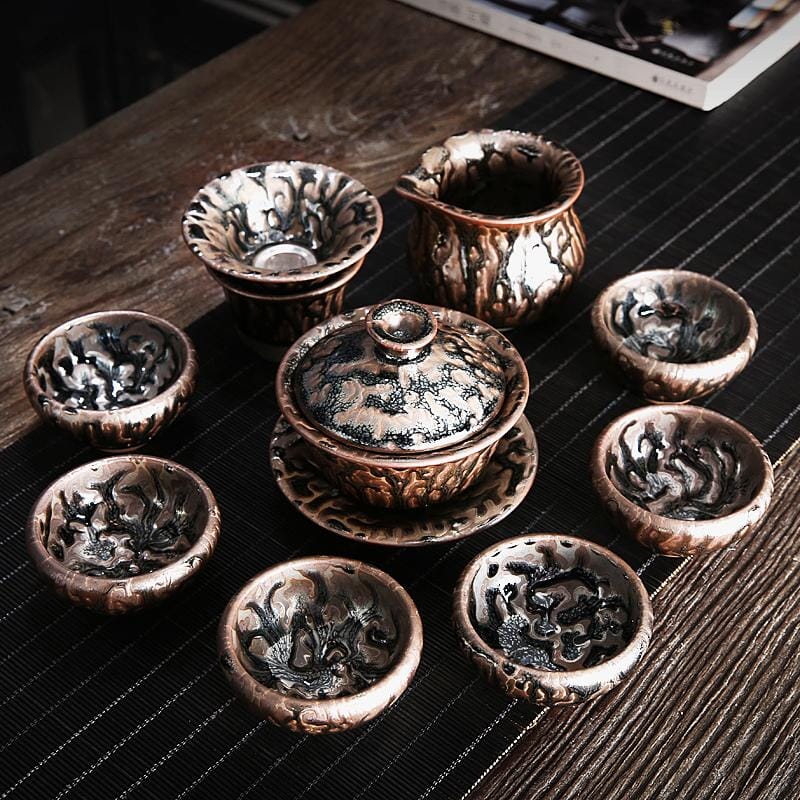
Yes—provided the bowl is chosen for use, not only display. The strongest luxury objects earn their place in daily life. A handmade tenmoku tea cup can elevate a quiet morning brew, a weekend gongfu tea session, or a shared pour of pu-erh tea without becoming too precious to touch.
For gifting, the value is easy to explain: the recipient receives an object made through a demanding process, with a surface no other bowl reproduces exactly. It has the emotional impact of a personal gift without requiring the recipient to be an expert in tea history.
For everyday ownership, the reward is sensory. The bowl’s weight, the visual contrast between tea and glaze, and the ritual of choosing a different cup for a different mood can make an ordinary break feel more intentional. That is why many buyers view a tenmoku tea bowl less as a luxury splurge and more as a durable personal ritual piece.
FAQ: What Should Buyers Know About Tenmoku Tea Bowl Value?
Why is tenmoku expensive?
Tenmoku is expensive because handmade bowls require skilled forming, glaze preparation, high-temperature firing, careful selection, and acceptance of kiln risk. The distinctive glaze result is difficult to reproduce consistently, so finished pieces carry more labor and uncertainty than standardized cups.
What is a realistic tenmoku tea bowl price?
A realistic tenmoku tea bowl price depends on the maker, bowl size, glaze outcome, firing method, finish, and whether you are purchasing an individual photographed piece. Compare details and workmanship rather than assuming that a single price point defines quality.
How is jian zhan cost determined?
Jian zhan cost is determined by the handmade process, glaze complexity, firing outcome, form, finish, and the seller’s transparency. A clear description of the actual bowl is more meaningful than unsupported claims of rarity.
What is the best value jian zhan to buy?
The best value jian zhan is a well-finished handmade bowl with a comfortable shape, a glaze you enjoy outside of product photos, and enough versatility for your usual tea routine. For most beginners, a medium bowl with an honest description is a smarter first choice than an extreme collector piece.
Is an oil spot tenmoku cup better than a hare’s fur bowl?
Neither is automatically better. An oil spot tenmoku cup offers a more speckled, reflective visual effect, while hare’s fur often creates flowing streaks. Choose based on the look you prefer, the actual bowl’s finish, and how you plan to use it.
Are tenmoku tea bowls Japanese pottery?
Tenmoku has a strong connection to Japanese tea culture, but the historic Jian ware tradition behind jianzhan originated in China. Modern makers and sellers may use related terms differently, so read the product description for the specific origin and process of the bowl you are considering.
Explore Our Collection
Ready to experience the world of tenmoku tea bowl? Browse our curated collection:
Disclaimer: This article is for informational purposes. Products and pricing subject to change.


Share:
Tenmoku Tea Bowl: A Handmade Story for Better Gongfu Tea and Meaningful Gifts
Tenmoku Tea Bowl: Bring a More Intentional Tea Ritual Home