

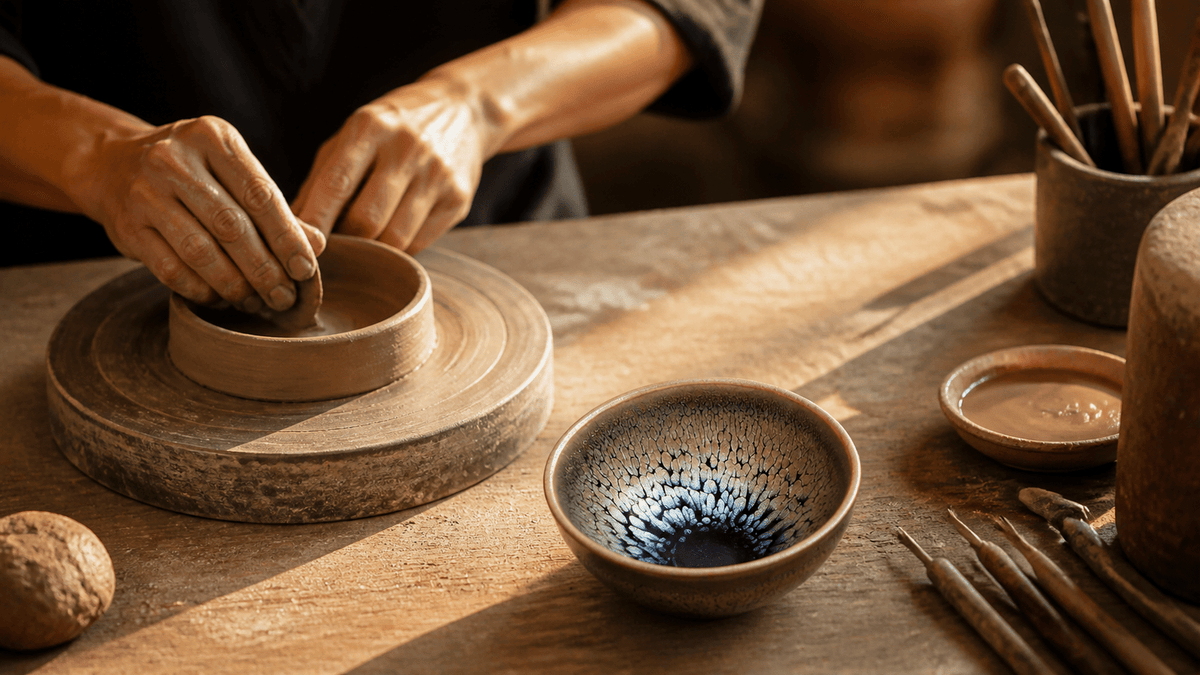

Tenmoku Tea Bowl: A Handmade Story for Better Gongfu Tea and Meaningful Gifts
A tenmoku tea bowl is more than a dark cup: it is a handmade ceramic shaped by iron-rich glaze, high heat, and the patient attention that makes gongfu tea feel deliberate. For a beginner pouring oolong in a small gongfu tea session—or a collector choosing a gift for tea lovers—a Jianzhan cup gives the ritual a clear sense of place.
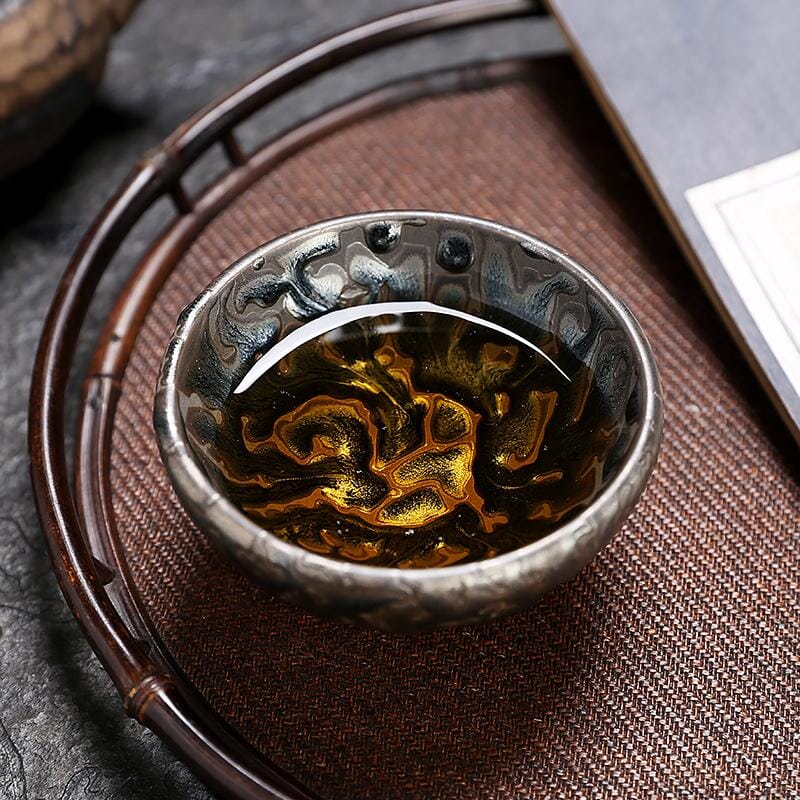
Its surface may show a quiet oil spot shimmer or fine partridge feather streaks, but the real appeal is the human process behind those effects. Each bowl connects a modern tea table with a ceramic tradition that began in Fujian, China, and later traveled through Japan as tenmoku became part of Japanese tea culture.
Key Takeaways
- A tenmoku tea bowl is a black-glazed tea vessel associated with Jian ware from northern Fujian, China.
- The distinctive oil spot and partridge feather effects emerge from glaze chemistry and kiln conditions; they are not printed decorations.
- Song Dynasty tea culture gave these bowls a practical role in whisked tea, while Japan helped carry the tenmoku name into a broader tea tradition.
- For modern buyers, the best Jianzhan tea cup should feel balanced in the hand, suit the intended tea ritual, and be selected for visible craftsmanship rather than a generic label.
- A handmade tea bowl can be a thoughtful premium gift because it is useful, tactile, and personal without needing to be overly formal.
What Is the Fujian Tea Bowl Tradition Behind a Tenmoku Tea Bowl?
The story starts in Fujian, a southeastern province of China with a long relationship to tea and ceramics. The Fujian tea bowl tradition is closely tied to Jian ware, often called Jianzhan today. These bowls were made for tea at the historic Jian kilns, where potters worked with dark clay bodies and iron-rich glazes.
Think of the bowl as a small landscape created under heat. Before firing, it may look like a simple dark vessel. In the kiln, minerals in the glaze can separate and move as temperatures rise and fall. The final surface can reveal dots, streaks, or a subtle metallic depth that no factory decal can fully duplicate.
That uncertainty is central to the craft. A tenmoku artisan can control clay preparation, bowl shape, glaze formula, firing schedule, and placement in the kiln. But the kiln still has the final word. Two bowls made from the same materials can emerge with different movement, color, and pattern.
This is why handmade ceramic matters to buyers who value objects with a visible maker’s hand. The goal is not sameness. It is a bowl with integrity: a comfortable foot, a rim that meets the lips naturally, glaze that suits the form, and a surface that rewards a second look.
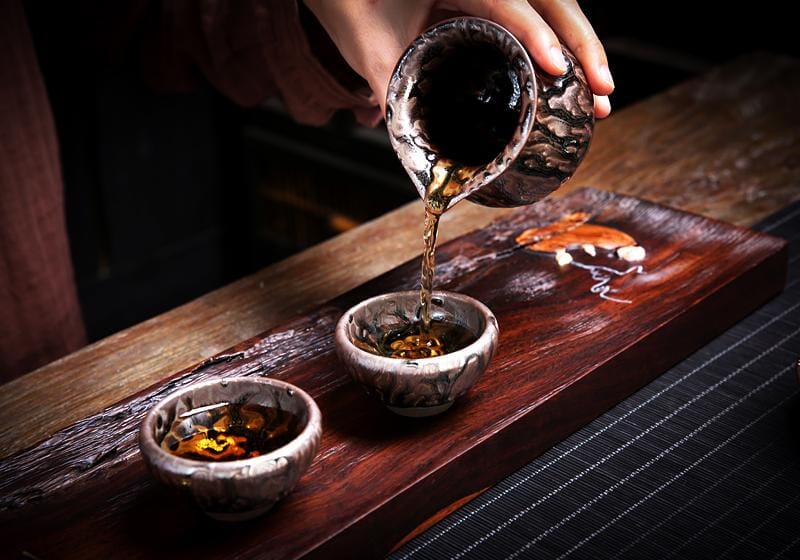
For gongfu tea, this character is especially welcome. Gongfu brewing uses small, intentional pours and asks you to slow down. A dark bowl gives pale teas, amber oolongs, and bright liquor a visual frame, much like a dark matte around a photograph. It does not make the tea better by magic; it makes attention easier.
How Did Song Dynasty Tea Culture Shape the Tenmoku Artisan’s Work?
Song Dynasty tea culture valued preparation, texture, color, and social exchange. Whisked tea was an important practice, and dark bowls offered a strong contrast for pale foam. In that setting, a black-glazed bowl was not merely decorative. It helped people see the tea and participate in a shared ritual.
Today, many Americans meet tenmoku through loose-leaf tea, gongfu brewing, or a modern matcha bowl. Those uses are not identical to historical Song practices, but they share a useful idea: the vessel changes the pace of the experience. A bowl with weight, warmth, and a quietly active glaze invites you to pause before the first sip.
The Song Dynasty also helps explain why the bowl should not be reduced to a trend label. Jianzhan history is about accumulated knowledge—how clay behaves, how glaze responds to atmosphere, and how a tea vessel can be both practical and expressive. That heritage is more meaningful than simply calling any black cup a tenmoku.
The name itself has a cross-cultural path. Chinese Jian ware was admired beyond Fujian, and the term tenmoku became established in Japan through the Japanese reading associated with Tianmu. A Japanese tea bowl may share an appreciation for restraint, tactile form, and tea ritual, yet it should not automatically be treated as the same object as a Fujian-made Jianzhan.
That distinction is helpful rather than limiting. It lets buyers appreciate the conversation between China and Japan without flattening either tradition. A Japanese tenmoku cup can reflect Japanese tea aesthetics; a Jianzhan bowl carries a specific connection to Fujian kiln traditions. Both can be beautiful, but their stories are not interchangeable.
What Can Jianzhan History Teach Us About Oil Spot, Partridge Feather, and Japanese Tea Bowls?
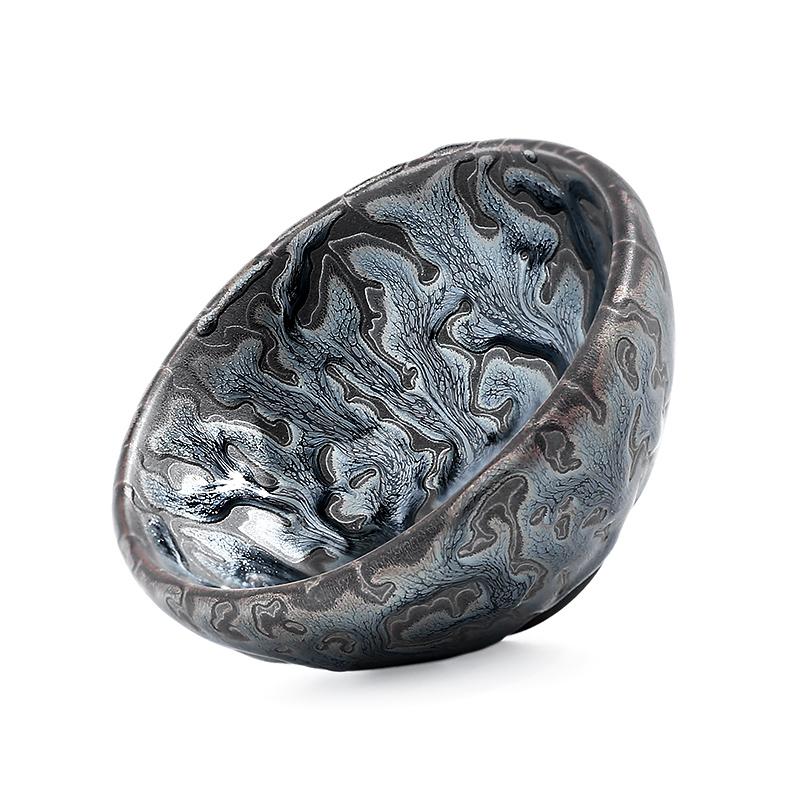
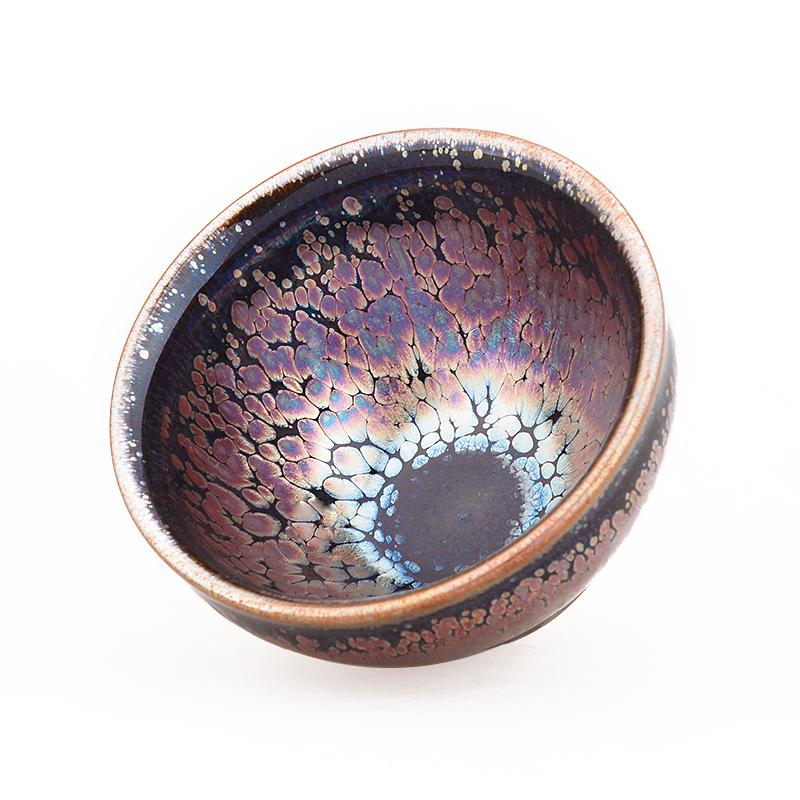
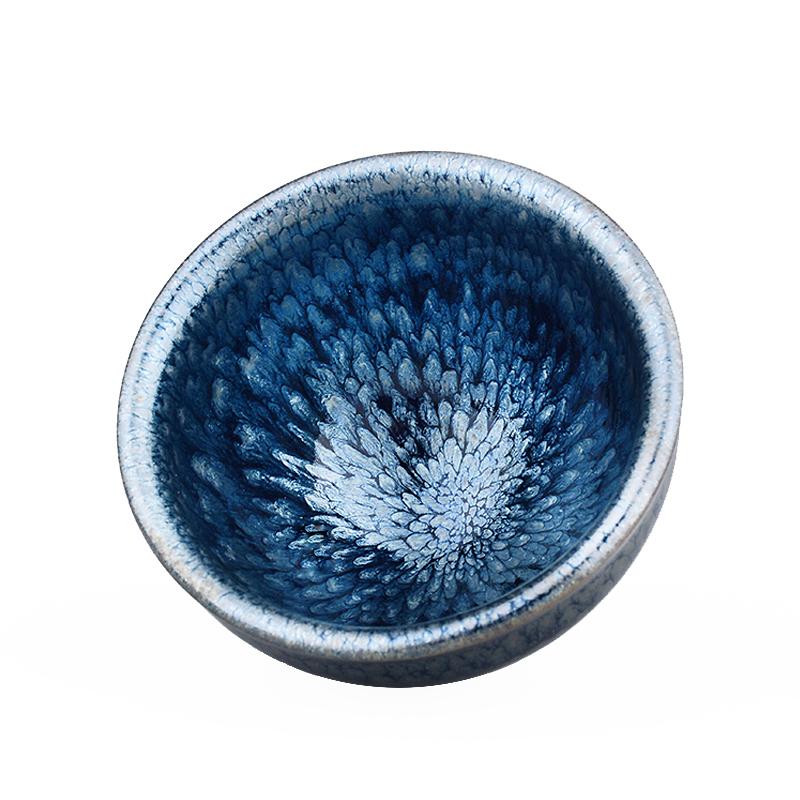
Jianzhan history teaches a simple buyer lesson: look beyond a single pattern name. Oil spot and partridge feather are useful descriptions, not universal grades. A well-made oil spot tenmoku cup may show dense, round mineral spots that catch light at different angles. A hare’s fur or partridge feather-style bowl may show fine, flowing streaks that feel more directional and organic.
Neither pattern is automatically superior. The right choice depends on the experience you want at the tea table. Oil spot often feels graphic and luminous. Partridge feather can feel more fluid and meditative. The bowl’s shape, glaze fit, finish, and comfort matter as much as the pattern itself.
| Style | What You May Notice | Best For | Buyer Consideration |
|---|---|---|---|
| Oil spot | Round, reflective mineral spots on a dark ground | A dramatic focal point for evening tea or gifting | View the bowl under more than one light source |
| Partridge feather or hare’s fur | Fine, elongated streaks that move across the glaze | Buyers who prefer a more flowing, natural surface | Check that the pattern complements the bowl shape |
| Classic dark tenmoku | Deep black-brown surface with restrained variation | Minimalist gongfu tea setups and everyday use | Focus on balance, rim comfort, and glaze depth |
| Japanese tea bowl | May emphasize Japanese form, tea context, and local aesthetics | Those building a Japanese tea ritual | Ask about origin and maker rather than assuming Jianzhan heritage |
Authentic appreciation is not about chasing a perfectly symmetrical pattern. In fact, a handmade bowl may have slight asymmetry, a changing glaze edge, or a mark of kiln variation that makes it feel alive. The better question is whether the piece feels intentional and well resolved.
If oil spot is the surface that speaks to you, Discover our collection of oil spot tenmoku cups. If you prefer the drawn, directional movement of fine streaks, Browse our hare's fur Jianzhan series.
Why Is a Handmade Tenmoku Tea Bowl a Thoughtful Gift for Tea Lovers?
A good gift for tea lovers should do more than look expensive on a shelf. It should give the recipient a reason to use it. A tenmoku tea bowl does that well because it belongs to a repeatable moment: the first morning steep, a quiet afternoon break, a shared pour after dinner, or a weekend tea session with friends.
It also works across experience levels. A curious beginner does not need to know every detail of Song Dynasty tea culture to enjoy a bowl’s warmth and texture. A more experienced drinker can appreciate its glaze, form, and historical connection. That makes it more approachable than many collectible objects that require prior knowledge.
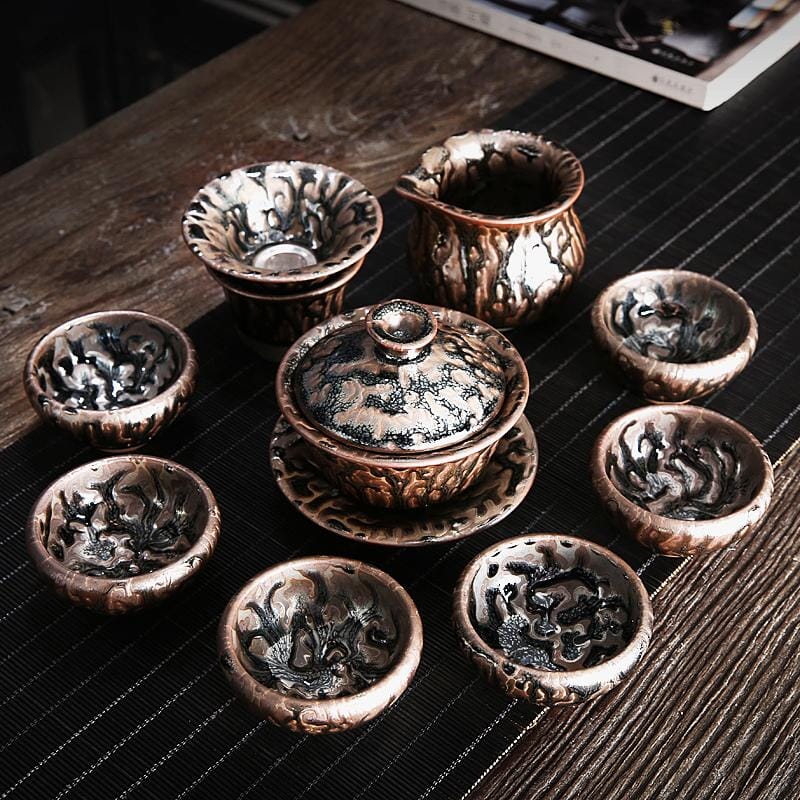
For a premium lifestyle buyer, the value is in specificity. Rather than giving another generic barware set or candle, you are giving a useful handmade object with a cultural story. It can sit comfortably beside a kettle, a tea tray, a favorite tin of oolong, or a small whisked-tea setup.
Presentation matters. Pair the bowl with a short card that explains its origin in simple language: black-glazed tea ware, inspired by the Fujian tradition, made to make a daily tea ritual feel more considered. Avoid overstating unverified claims about an individual maker, age, or firing method. A clear, honest story is more persuasive than a dramatic one.
For a gift, choose a versatile bowl size, a rim that appears comfortable, and a glaze style aligned with the recipient’s taste. Oil spot can feel celebratory and bold. A calmer dark surface can suit a minimalist home. Partridge feather patterns often appeal to someone who enjoys natural variation and close-looking detail.
How Should You Choose a Tenmoku Tea Bowl for Gongfu Tea or Matcha?
When comparing a tenmoku tea bowl for sale, start with use rather than rarity. The best Jianzhan tea cup for a small gongfu tea session may not be the best choice for whisking matcha. Gongfu drinkers often prefer a bowl that is easy to cradle and suitable for smaller pours. For matcha, a wider bowl with enough interior space for whisking may be more practical.
- Choose by ritual: Smaller, easy-to-hold forms suit gongfu tea; wider forms may better suit a matcha bowl routine.
- Check the rim: A smooth, comfortable drinking edge matters more than an elaborate pattern.
- Notice the foot: A stable foot ring helps the bowl sit confidently on a tea table.
- View the glaze in varied light: Oil spot and partridge feather effects can change from daylight to warm evening light.
- Ask what is known: Confirm origin, dimensions, care guidance, and whether the bowl is intended for food and beverage use.
- Buy the individual piece: With handmade ceramic, product photographs and descriptions should represent the specific bowl whenever possible.
Care is straightforward but deserves respect. Hand-wash with mild soap, avoid abrupt temperature changes, and let the bowl dry fully before storing it. A handmade ceramic bowl is meant to be used, but it should not be treated like a disposable coffee mug.
The best purchase is not always the flashiest one. It is the bowl you will reach for because it feels right in your hand, makes your tea look inviting, and brings a little more presence to an ordinary day.
Frequently Asked Questions About Tenmoku Tea Bowls
What is a tenmoku tea bowl used for?
A tenmoku tea bowl can be used for drinking tea, gongfu tea tasting, and—in a suitable wide form—whisked tea such as matcha. It is best understood as a tea vessel designed to make the color, warmth, and ritual of tea more noticeable.
What does a tenmoku artisan do differently from a factory producer?
A tenmoku artisan shapes, glazes, and fires each bowl with close attention to materials and kiln behavior. Factory production can create consistent cups efficiently, while handmade work usually preserves more variation from one piece to the next.
What is the Fujian tea bowl tradition?
The Fujian tea bowl tradition refers to the ceramic heritage associated with Jian ware from northern Fujian, China. It is known for dark, iron-rich glazes and its historical relationship with tea drinking during the Song Dynasty.
How does Song Dynasty tea culture relate to a modern tenmoku tea bowl?
Song Dynasty tea culture helped establish dark bowls as useful vessels for whisked tea because they provided contrast for pale foam. Modern tea drinkers may use tenmoku bowls differently, but the emphasis on attentive preparation and visual appreciation remains relevant.
Are oil spot tenmoku cups and partridge feather bowls the same?
No. Both are glaze effects associated with dark tea ware, but oil spot usually appears as rounded reflective spots, while partridge feather or hare’s fur tends to appear as elongated streaks. Each can be beautiful when the glaze and form work together.
Is a Japanese tea bowl the same as Jianzhan?
Not necessarily. Tenmoku has an important history in Japan, and Japanese tea bowls may share related aesthetics or tea uses. Jianzhan specifically refers to the Fujian-linked Jian ware tradition, so origin and maker information matter when comparing pieces.
How do I choose the best Jianzhan tea cup as a gift?
Choose a bowl that matches the recipient’s tea habit and visual taste. Prioritize a comfortable shape, clear product information, a glaze they will enjoy seeing often, and a story you can explain honestly in a sentence or two.
Bring a Longer Tea Story to the Table
A tenmoku tea bowl is a small object with a long cultural path: from Fujian kilns and Song Dynasty tea culture to Japan and today’s American tea tables. Choose one for the pattern if you like, but keep it for the way it turns an everyday pour into a moment worth noticing. Explore the glaze and form that fits your own ritual, or choose one as a gift that invites someone else to begin theirs.
Explore Our Collection
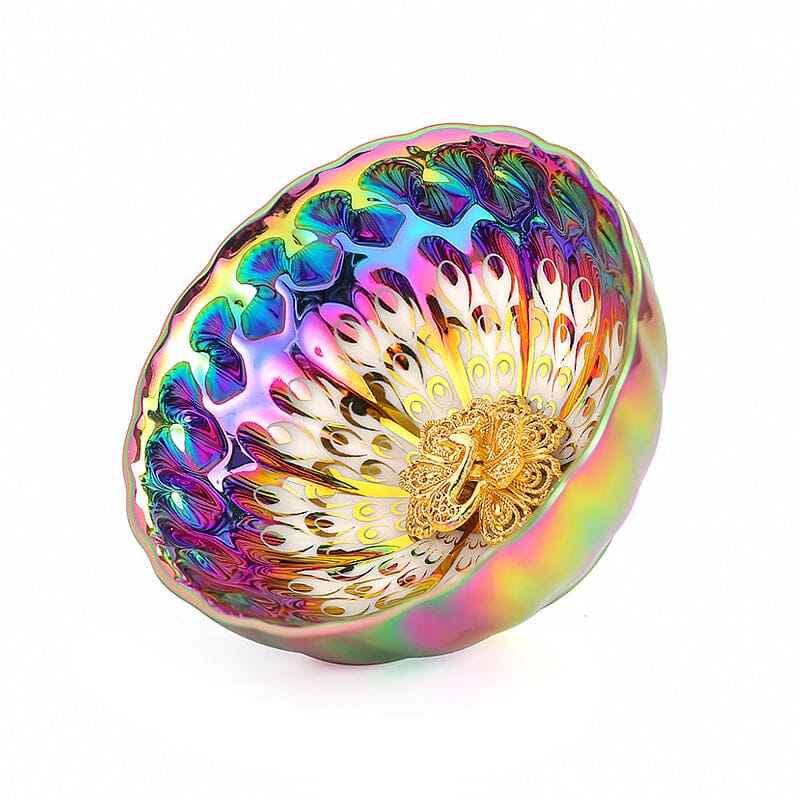
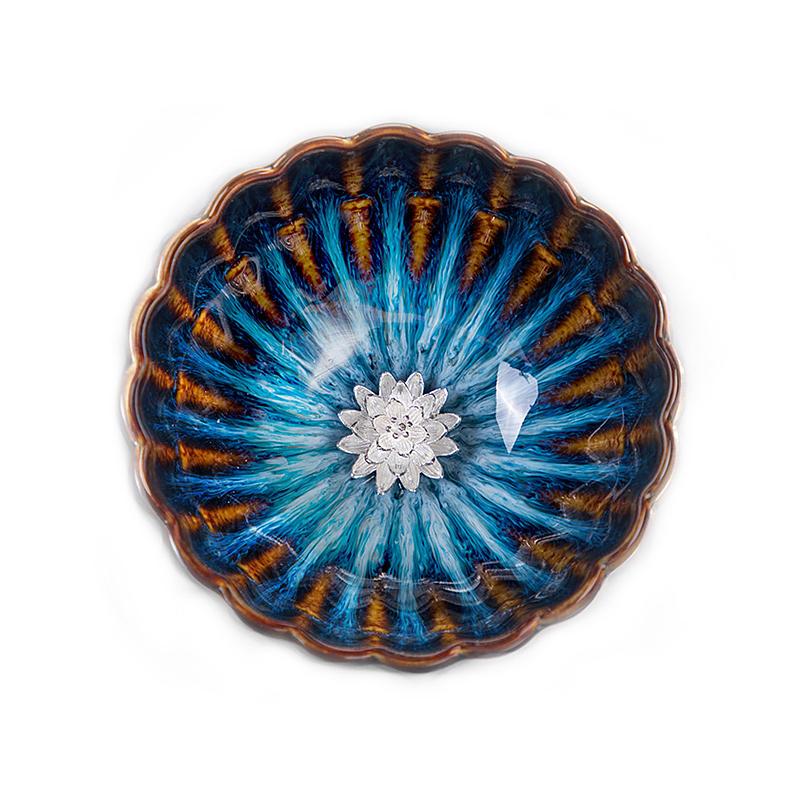
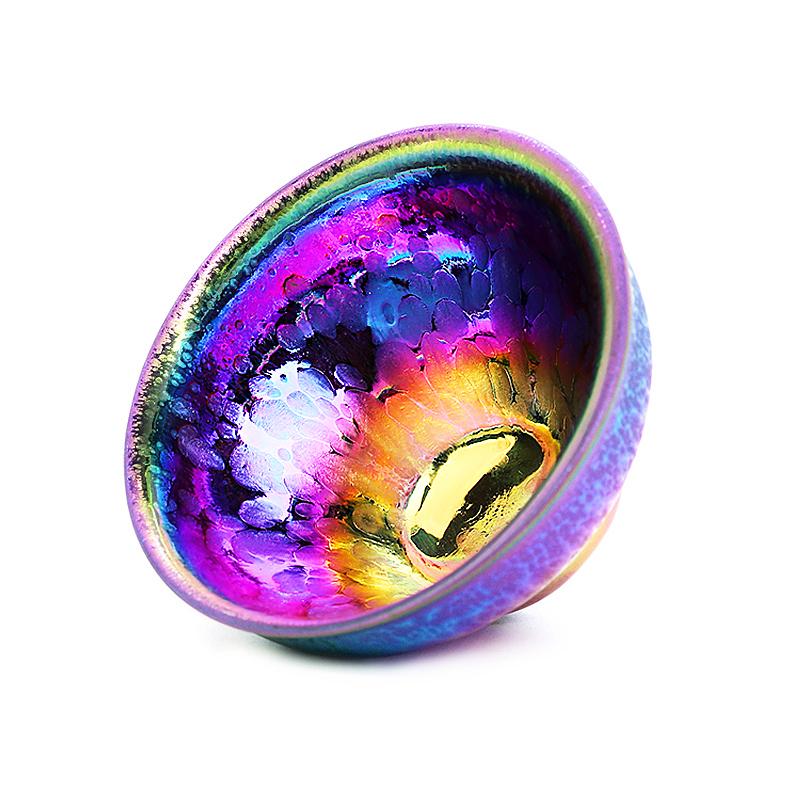
Ready to experience the world of tenmoku tea bowl? Browse our curated collection:
Disclaimer: This article is for informational purposes. Products and pricing subject to change.


Share:
Real vs Fake Tenmoku Tea Bowl: Buy With Confidence
Why a Tenmoku Tea Bowl Is Expensive—and How to Buy One With Confidence