

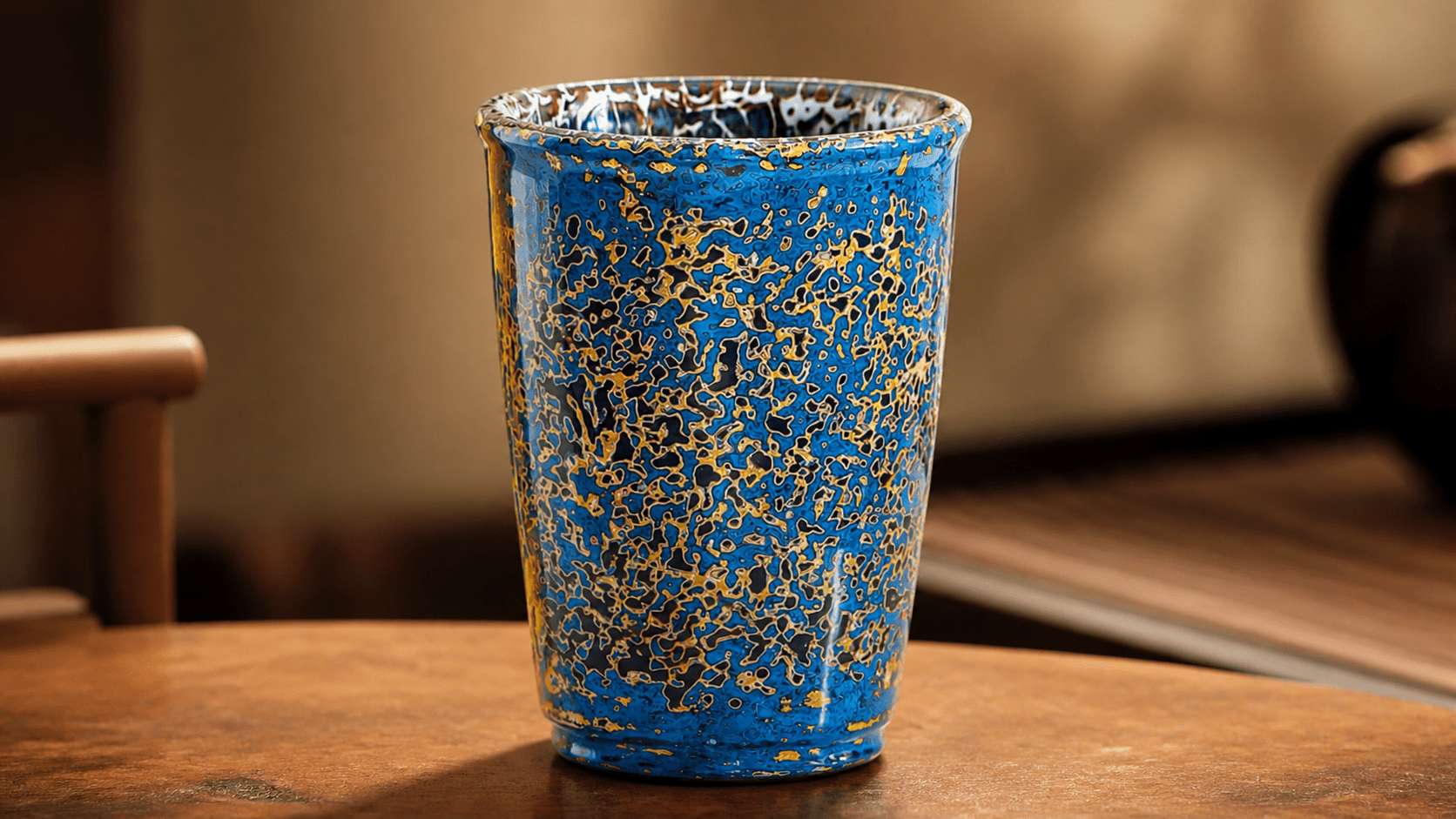

Tenmoku Tea Bowl Authenticity Guide: Enjoy Gongfu Tea and Buy With Confidence
A real tenmoku tea bowl is not defined by a single rainbow pattern, a magnet test, or a high price. The most reliable way to assess one is to look at the seller’s claims, the bowl’s making evidence, and the glaze as a whole—especially when choosing a handmade tenmoku tea cup for gongfu tea or a meaningful gift for tea lovers.
For U.S. buyers, the terminology can be confusing. “Tenmoku” is commonly used for dark-glazed tea bowls, while Jianzhan refers more specifically to black-glazed bowls associated with Jianyang in Fujian, China. A beautiful bowl can be handmade and honest without being an antique or an original Song Dynasty glaze artifact; the problem begins when a modern decorative cup is presented as something it is not.

Key Takeaways
- A genuine historical Jian ware bowl requires credible provenance, not just an attractive glaze.
- A modern authentic Jianzhan should have clear, truthful information about where and how it was made.
- Natural kiln variation is common, but irregularity alone does not prove handmade work.
- Printed, sprayed, or repeated-looking surface effects can signal mass production or decorative imitation.
- Ask for photos of the foot, interior, rim, and full bowl—not only dramatic close-ups of the glaze.
What Does “Real vs Fake Tenmoku” Actually Mean?
Real vs fake tenmoku is not as simple as authentic versus worthless. In the tea world, the word “tenmoku” traveled through Japan: it is the Japanese reading of Tianmu, a name connected to the historical exchange of Chinese tea bowls and Japanese tea culture. Today, a Japanese tea bowl, a modern Chinese Jianzhan, and a factory-made black matcha bowl may all be marketed with the word tenmoku.
That means buyers should separate three very different claims:
- Antique or historical Jian ware: a bowl represented as genuinely old, such as Song Dynasty material. This is a specialist category and should come with credible provenance, condition information, and ideally expert documentation.
- Modern handmade Jianzhan: a contemporary bowl made in, or credibly connected to, the Jianyang tradition. It may use iron-rich dark glazes and kiln-fired effects inspired by historical wares.
- Tenmoku-style ware: a modern bowl using a dark or variegated glaze. It can be enjoyable and well made, but it should not automatically be described as authentic Jianzhan.
Think of it like wine. A bottle can be excellent without being a rare vintage from a famous estate. Likewise, a contemporary tenmoku tea bowl can be a satisfying daily cup without being an antique, a museum object, or a direct historical survivor.
How to Identify Real Jianzhan Before You Buy
If you are learning how to identify real Jianzhan, begin with the listing rather than the pattern. Honest sellers describe what they know and avoid turning uncertainty into a sales pitch. Look for specific, verifiable details about the maker, workshop, origin, firing method, and whether the piece is contemporary.
1. Check whether the origin claim is precise
If a seller says a bowl is from Jianyang, ask what that means. Was it made there, glazed there, fired there, or merely inspired by Jian ware? “Jianyang-style” and “made in Jianyang” are not interchangeable. A trustworthy product page should not use ancient history as a substitute for current product information.
2. Study the foot and unglazed areas
The foot is often more revealing than the most colorful part of the glaze. On many handcrafted bowls, the unglazed foot ring may show clay character, trimming marks, or small variations from hand finishing. The glaze may thin naturally near the foot or rim. These are useful observations, not automatic proof.
A perfectly uniform foot does not always mean a bowl is fake; some studios work very cleanly, and some production methods are carefully controlled. But if a seller provides only front-facing glamour shots and avoids the base entirely, treat that as missing information.
3. Look for variation with logic
Handmade ceramic variation usually feels connected to the making process. A bowl may be slightly asymmetric, the glaze may pool more deeply in one area, and the rim may show subtle changes in thickness. The visual effect should appear integrated into the glaze rather than laid on top like a graphic print.
Do not confuse imperfections with authenticity. A warped rim, pinholes, or rough foot may be acceptable in a rustic bowl, but they can also affect usability, comfort, and value. The right question is not “Does it look imperfect?” but “Does the seller accurately show and describe its condition?”
4. Ask for full-bowl photographs and video
Glaze photos taken under bright directional light can exaggerate color. Request images in normal indoor light, a view of the interior, the rim, the foot, and a short rotating video if you are considering a higher-priced piece. This helps reveal whether the pattern has depth, whether the bowl sits flat, and whether its proportions work for gongfu tea.
Jianzhan Oil Spot vs Fake: What Should You Look For?
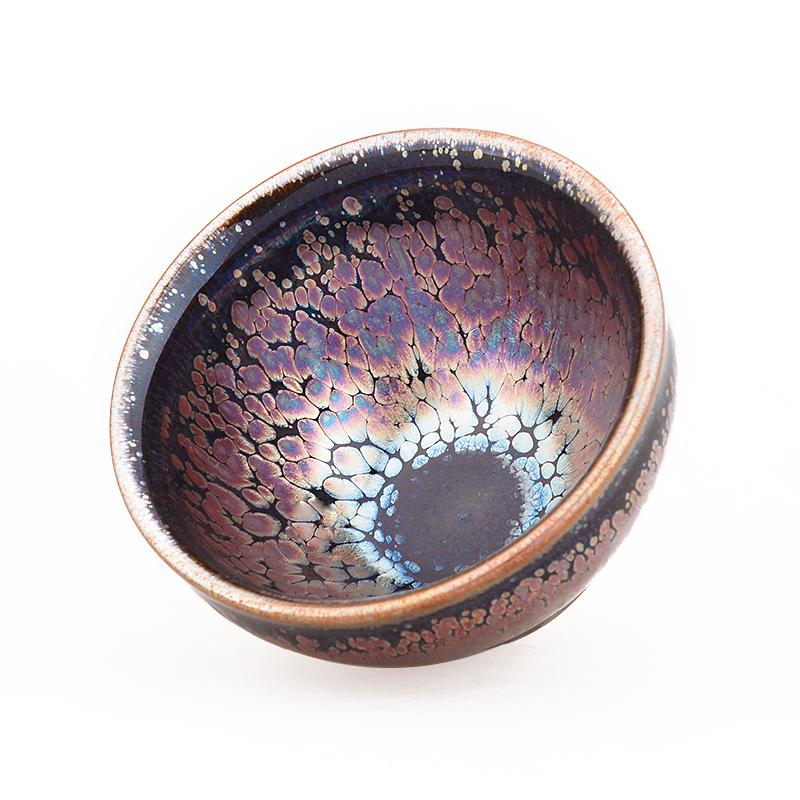
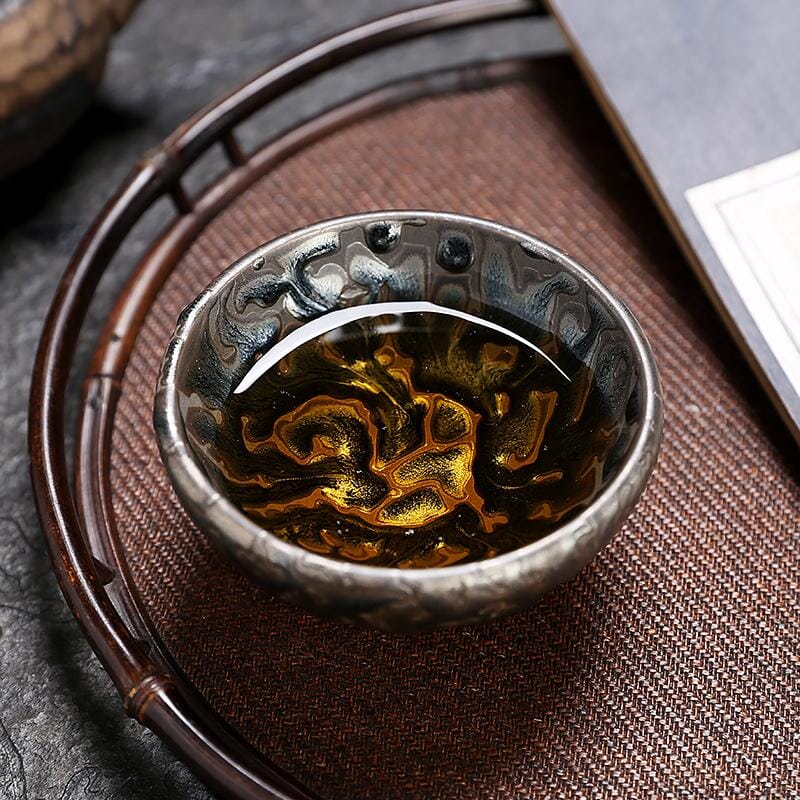
Oil spot is one of the most recognizable effects associated with Jianzhan. In a kiln-fired glaze, iron-bearing materials and firing conditions can create metallic-looking spots or halos. But an oil-spot appearance alone does not establish that a bowl is old, handmade, made in Jianyang, or even made through the same process as historical Jian ware.
| What to assess | What may support a credible handmade claim | What deserves a closer look |
|---|---|---|
| Pattern | Variation in spot size, spacing, edge definition, and color across the bowl | Identical repeated circles or a pattern that looks mechanically copied |
| Surface depth | Visual complexity that shifts with light and follows the curved glaze surface | A flat-looking graphic, sticker-like effect, or obvious printed overlay |
| Glaze behavior | Natural pooling, thinning, or transitions near rim and foot | Uniform coating that ignores form and has no visible glaze movement |
| Listing evidence | Maker, location, multiple views, dimensions, and transparent process language | Only vague words such as “rare,” “imperial,” or “100% Song Dynasty” without evidence |
| Price and promise | Pricing consistent with contemporary handmade work and disclosed quality level | Extraordinary historical claims paired with no provenance or implausible urgency |
When comparing jian zhan oil spot vs fake examples online, remember that phone screens, filters, and product lighting can distort metallic effects. A multicolored sheen is not a laboratory certificate. Judge the pattern alongside the foot, the seller’s disclosures, and the overall consistency of the story.
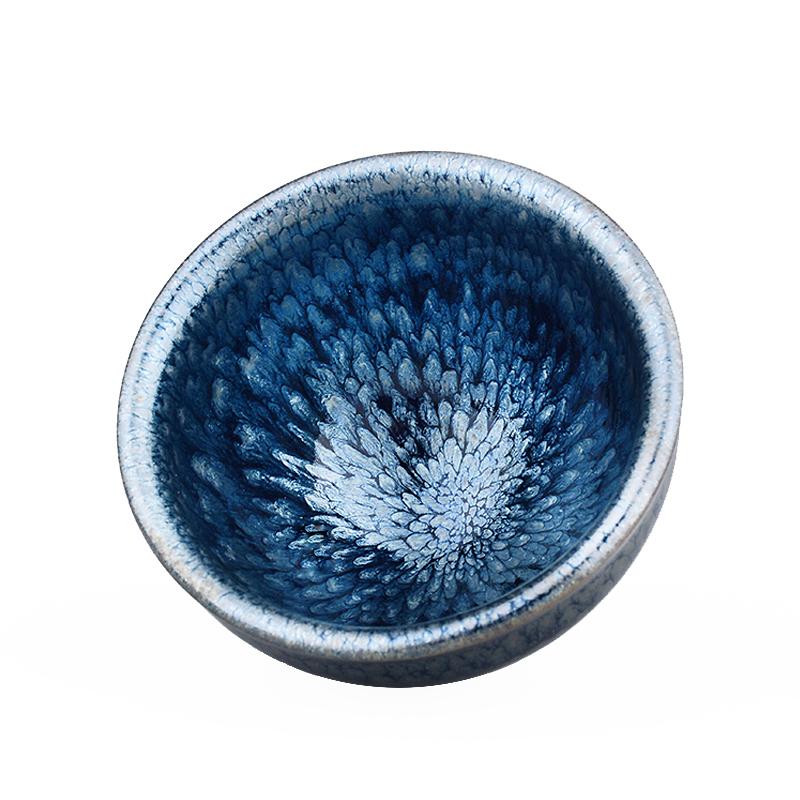
Partridge feather is another familiar term. It usually describes fine streaked or feather-like glaze effects, not a promise that every line must be identical. The best examples invite close looking, but the label itself should never replace evidence of origin or workmanship.
Can You Trust a Song Dynasty Glaze Claim?
Be especially careful with broad historical language. A modern maker may respectfully study a Song Dynasty glaze tradition, use traditional references, or pursue similar kiln effects. That is very different from claiming that a newly made bowl is a Song Dynasty original.
For an actual antique claim, ask for provenance: where the bowl came from, how it was acquired, its condition history, and any professional evaluation. Major age claims need a higher standard of evidence than a general “tenmoku-inspired” description. Surface wear can be imitated, and a dark glaze can make age difficult for a beginner to judge from photographs.
A responsible seller should be comfortable saying “contemporary handmade,” “inspired by Jian ware,” or “modern Jianzhan” when that is the truth. Those terms do not make the bowl less enjoyable. In fact, they help you buy the right object for the right reason.
What Materials and Process Markers Matter Most?
Traditional Jian ware is associated with dark, iron-rich glazes and high-temperature firing. Modern makers may work with related materials and firing approaches, but recipes, clay bodies, kiln atmospheres, and results vary from studio to studio. Avoid sellers who make sweeping claims about “magic minerals,” health effects, or guaranteed water transformation without evidence.
Instead, focus on tangible process markers:
- Clay body: The exposed foot may reveal a warm brown, reddish-brown, gray, or darker body depending on the materials and firing. Color alone is not a pass-or-fail test.
- Glaze movement: Look for believable changes where glaze pools in the well or thins over a rim, rather than a perfectly detached decorative layer.
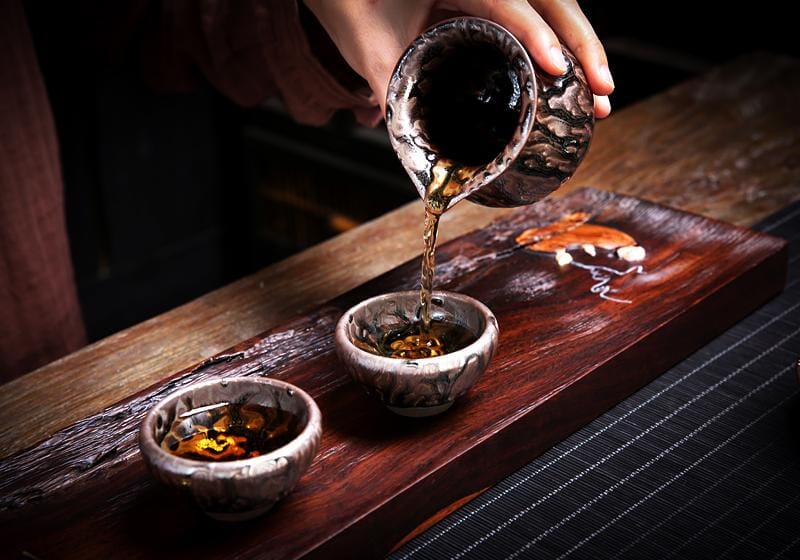
- Form: A tea bowl should feel intentional in the hand. For gongfu tea, many buyers prefer a smaller cup that brings aroma close without holding too much tea.
- Finish: The foot should be sanded or finished well enough to rest safely on a tea tray. Sharp edges are a quality concern, not a romantic handmade detail.
- Maker accountability: Names, workshop details, process notes, dimensions, and care guidance are more meaningful than grand historical slogans.
If you enjoy pu-erh tea, oolong, or richly roasted teas, a dark-glazed bowl can create a pleasing visual contrast with the liquor. For whisked tea, a tenmoku bowl may be used more like a matcha bowl depending on its size and shape. Choose based on your actual ritual, not just the glaze’s appearance in a product photo.
What Are the Most Common Fake or Misleading Tenmoku Listings?
Most misleading listings fall into predictable patterns. The issue is often not that the object exists, but that its description overstates origin, age, process, or rarity.
- Printed or decal-like glaze imagery: Decorative patterns may be transferred or mechanically repeated while being marketed as unique kiln transformation.
- Artificially aged surfaces: Dirt in cracks, exaggerated wear, or vague “excavated” stories can be used to suggest age without provenance.
- Generic imports labeled as Jianzhan: A black cup may be marketed as authentic Jianzhan without identifying a maker, workshop, or meaningful connection to Jianyang.
- Misused Japanese language: Calling any dark bowl a Japanese tea bowl or a Japanese tenmoku cup can obscure its actual origin. Japan has its own important tea-ceramic traditions, but terminology should be accurate.
- Health or investment promises: Claims that a cup guarantees better health, dramatically changes water, or will certainly appreciate in value should be treated as marketing, not proof of quality.
Price can be a signal, but it is never a verdict. An inexpensive bowl can be honestly sold as tenmoku-style ware. A costly bowl can still be poorly documented. Buy the evidence, craftsmanship, and usability—not just a price tag or a glowing description.
How Should You Buy a Tenmoku Tea Bowl for Sale as a Gift?
For a first purchase or a jianzhan tea cup gift, clarity matters more than collecting jargon. A good gift should fit the recipient’s tea habits and come from a seller who plainly states what the cup is.
Use this practical checklist before purchasing a tenmoku tea bowl for sale:
- Confirm whether it is contemporary handmade, antique, or tenmoku-style ware.
- Review dimensions and capacity. Small cups are often best for gongfu tea; larger bowls may suit matcha or slower sipping.
- Inspect photos of the exterior, interior, rim, and foot.
- Read the return, damage, and care policies before giving it as a gift.
- Choose a glaze effect the recipient will enjoy daily, whether oil spot, hare’s fur, or partridge feather—not simply the rarest-sounding label.
An authentic jian zhan tea cup can be a memorable gift because no two kiln-fired surfaces look exactly alike. The value is in the tactile ritual: warming the cup, seeing tea against a dark glaze, and using a made object over time. Explore our handmade Jianzhan tea cups when you want contemporary pieces described for everyday tea use, or Discover our collection of oil spot tenmoku cups to compare glaze character across individual bowls.

Frequently Asked Questions
How do I identify real Jianzhan from online photos?
Look for transparent origin information, full-bowl photos, clear views of the foot, dimensions, and an honest description of whether the piece is contemporary handmade or antique. A glaze close-up alone cannot verify authenticity.
Is an oil spot pattern proof of an authentic Jianzhan?
No. Oil spot can be a beautiful kiln-fired effect, but it does not by itself prove age, origin, or handmade production. Assess the pattern with the seller’s documentation, the whole form, and the glaze behavior.
What is the difference between Jianzhan oil spot vs fake oil spot?
A credible handmade glaze usually shows variation that follows the bowl’s curved surface and firing behavior. A suspicious example may look printed, overly repetitive, flat, or disconnected from the underlying glaze. Neither observation is conclusive without seller evidence.
Are all tenmoku tea bowls made in China?
No. “Tenmoku” is used broadly for dark-glazed tea bowls and has an important history in both China and Japan. Some bowls are modern Chinese Jianzhan, some are Japanese tea bowls, and some are made elsewhere in a tenmoku-style finish.
Can a modern bowl be an authentic Jianzhan tea cup?
Yes. “Authentic” can accurately describe a modern handmade Jianzhan when the maker and origin are represented truthfully. It should not be confused with an authenticated antique unless there is credible provenance.
Is a tenmoku tea bowl a good choice for pu-erh tea or gongfu tea?
Yes, if the size feels right for your brewing style. Smaller bowls can work well for gongfu tea, while the dark interior can make the color of pu-erh tea easier to appreciate. Preference matters more than a universal rule.
Conclusion: Choose Evidence Over Hype
The best way to approach real vs fake tenmoku is to slow down and ask better questions. Verify what “authentic” means in the listing, inspect the whole bowl, and be cautious of claims that are too dramatic to support. A well-made contemporary bowl does not need a fictional antique story to earn a place in your tea ritual.
Choose a piece that is honestly represented, comfortable to use, and beautiful in your own light. That is the most reliable path to a tenmoku tea bowl you will keep reaching for—and a gift for tea lovers that feels personal rather than performative.
Explore Our Collection
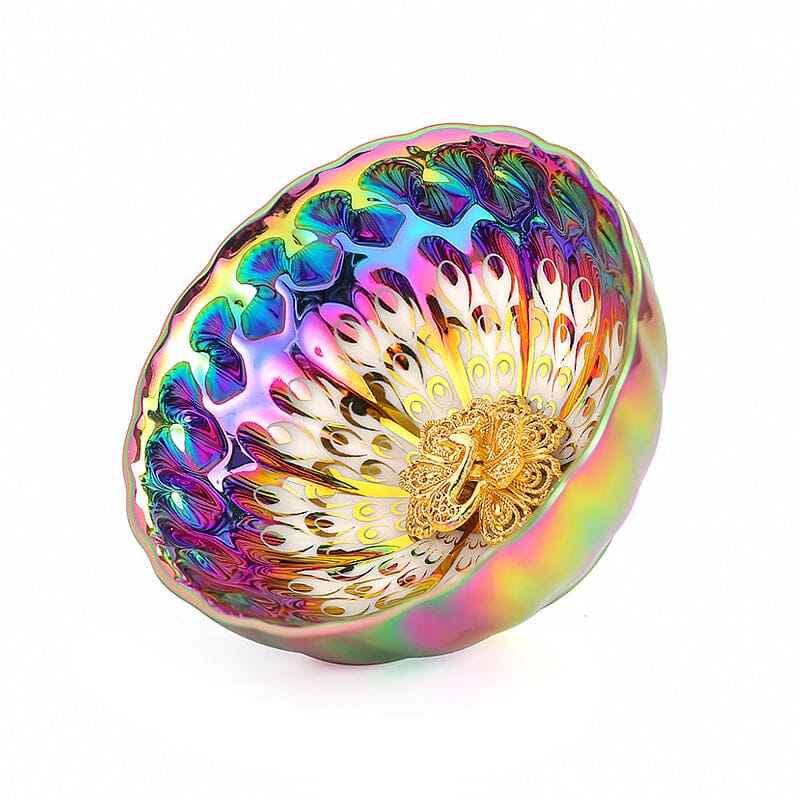
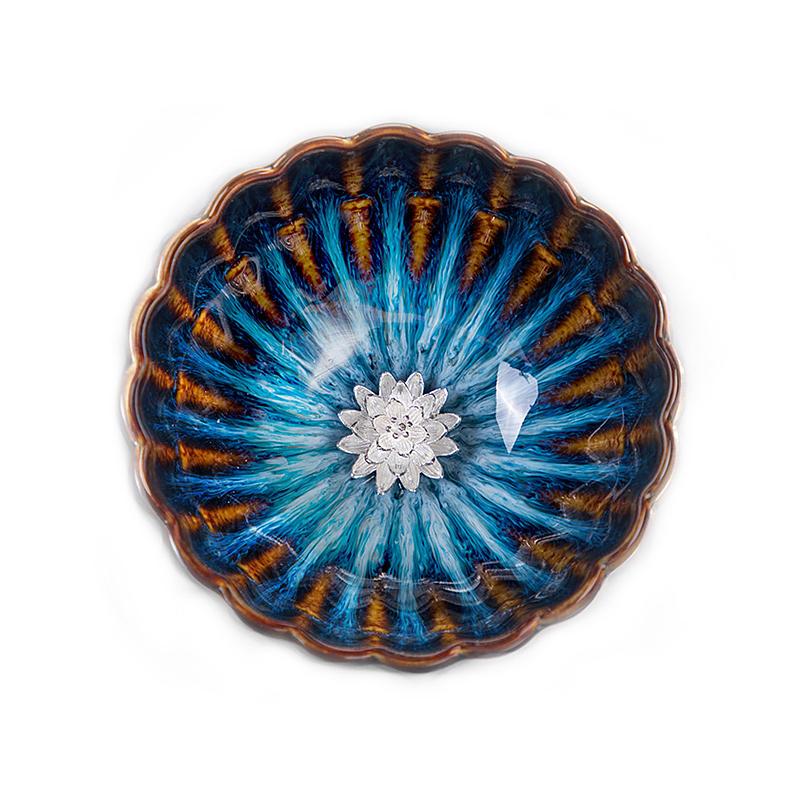
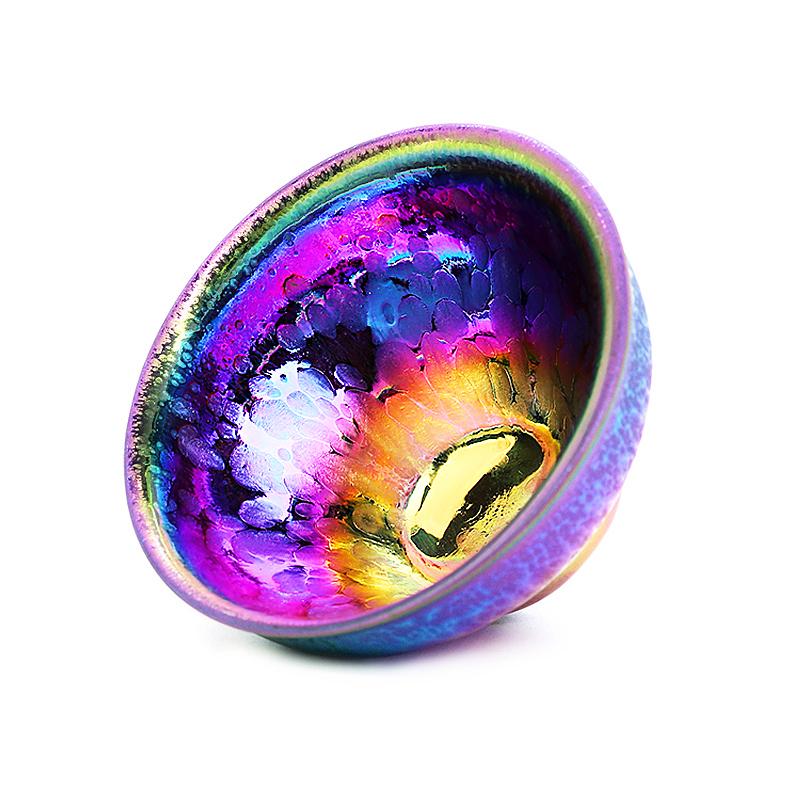
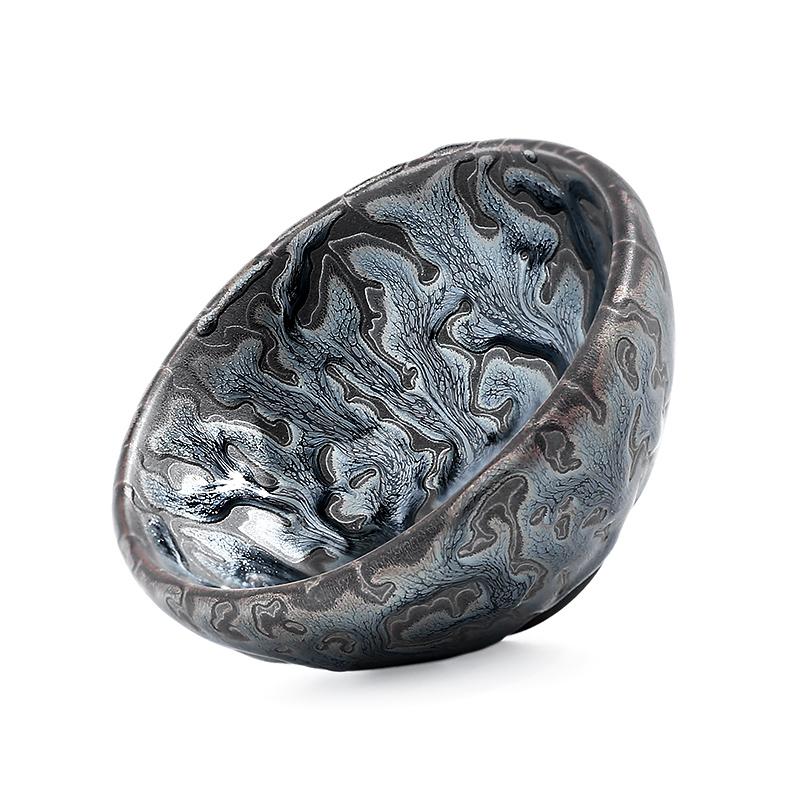
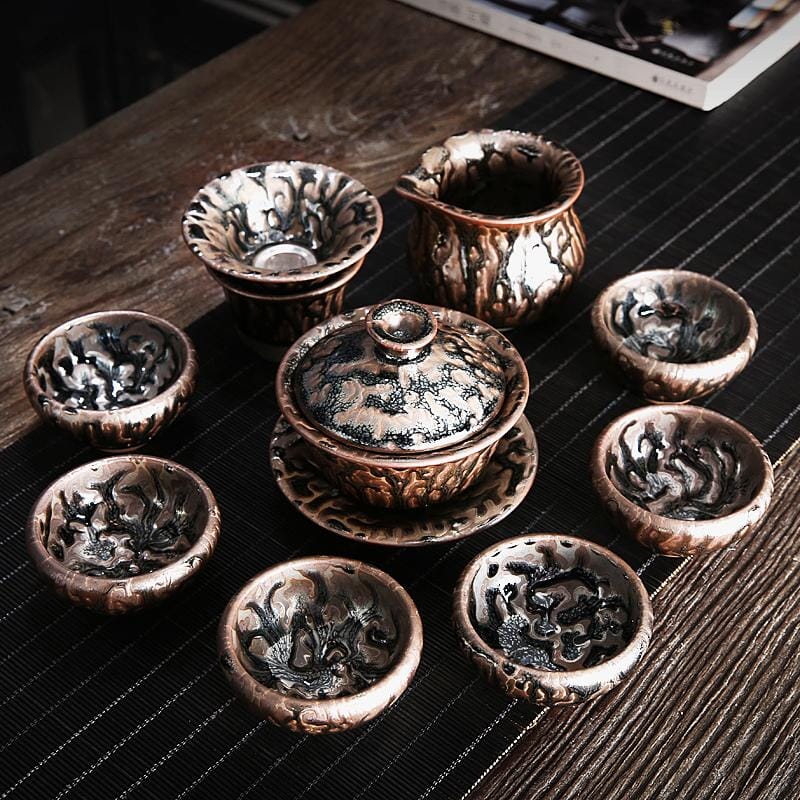
Ready to experience the world of tenmoku tea bowl? Browse our curated collection:
Disclaimer: This article is for informational purposes. Products and pricing subject to change.


Share:
Tenmoku Tea Bowl: Bring a More Meaningful Tea Ritual Home
The Tenmoku Tea Bowl: A Journey Through Fire, Clay, and Timeless Tea Ritual